


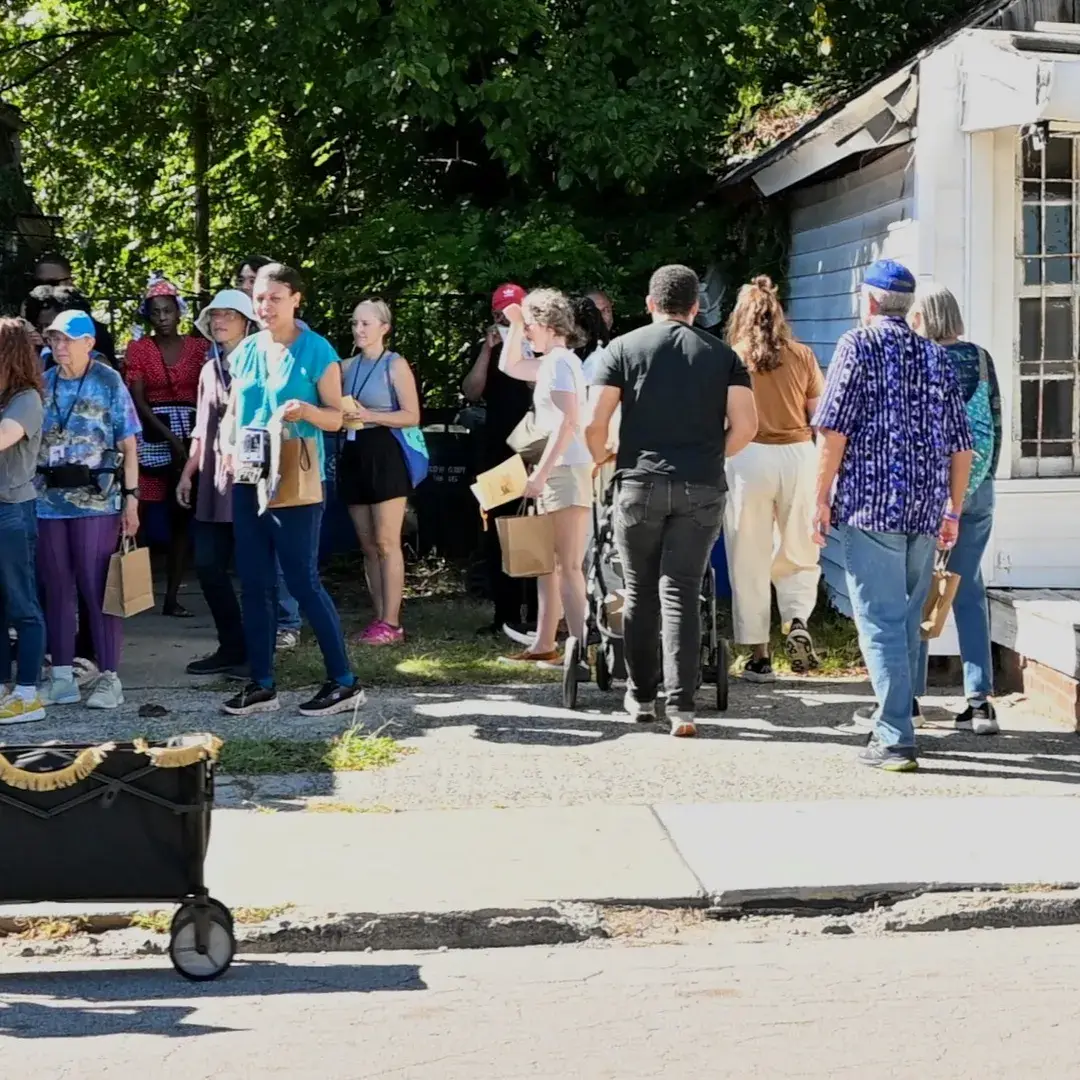
Earlier this month, I shared the news that Preservation Durham is entering a period of transition as I prepare to step away from my role as Executive Director at the end of June. As we begin the search for new leadership, I’m mindful of both the opportunity ahead and the strong foundation this organization is built on. It has been a privilege to serve in this role and to work alongside such a committed community. I’m confident that the next Executive Director will build on this momentum and help carry the work forward in meaningful ways. You can learn more about the position and how to apply on our website.
As we step into May, National Preservation Month, we’re reminded that preservation work is always evolving, and often requires both celebration and advocacy. This year, that call to action is especially urgent. The President’s FY 2027 budget proposal includes a dramatic reduction to the Historic Preservation Fund (HPF), cutting it by nearly 95 percent and leaving only $11 million in place, primarily for grants to HBCUs. This comes on the heels of a similar proposal last year that Congress ultimately rejected on a bipartisan basis, affirming the essential role the HPF plays in communities nationwide.
The stakes are high. The HPF supports our State and Tribal Historic Preservation Offices and a wide range of grant programs that make preservation work possible at the local level. Without it, much of the infrastructure that protects historic places and the stories they hold would be at risk. As we approach the nation’s 250th anniversary, continued investment in this work is not just symbolic, it is essential.
I encourage you to take a moment this month to reach out to our elected officials in Congress and advocate for strong, continued funding for the Historic Preservation Fund. The National Trust for Historic Preservation has made this easy to do with an online form you can visit here. Your voice matters, and collective advocacy has made a difference before (including last year!).
Closer to home, I hope you will join us for several important and celebratory moments in the weeks ahead. On May 12, we will gather for our Annual Member and Business Meeting, where we will vote on a new slate of board members and recognize those whose service is concluding. Following the meeting, we’ll host our annual Home Tour lecture, offering insight into this year’s featured neighborhood and the stories behind it. Then, on May 16 and 17, we look forward to welcoming you to Hope Valley for our annual Home Tour, a chance to experience the power of preservation firsthand.
Thank you for your continued support of Preservation Durham, and for the role each of you plays in sustaining this work.
Home Security Life Insurance Building (505 W. Chapel Hill St):
Our advocacy work continues to move forward in meaningful ways, including a recent important win for the former Home Security Life Building at 505 W. Chapel Hill Street. City Council voted at their April 6 meeting to proceed with negotiating an “option to purchase” agreement with our statewide partner, Preservation North Carolina (PNC). This agreement will allow the City to work with PNC to separate the historic building onto its own parcel, opening the door for its adaptive reuse while ensuring long-term protection through a preservation covenant held by PNC. While there is still work ahead, this marks a significant step toward securing a sustainable future for the building and demonstrates what can be accomplished through partnership, persistence, and a shared commitment to preservation.
The annual meeting is a time for us to celebrate accomplishments from the past year, learn about what’s in store for this year, and nominate new board members. Following our annual meeting, we’ll transition into our home tour lecture featuring a presentation from local author Lee Pace. Learn more about the history of the country club and golf course, then join us on May 16-17 for our annual home tour: Hope Valley Centennial.
Join Preservation Durham as we celebrate the 100th anniversary of Hope Valley with this year's home tour! Started in 1926, the community was built around the Hope Valley golf course, and was explicitly designed to accommodate the rise of the automobile in the early twentieth-century United States. From its inception, Hope Valley has been defined by incredible period revival homes; many of the originals designed by Durham architect George Watts Carr. Hope Valley is one of the twenty national register historic districts in Durham, an indication of its rich and integral role in Durham's history.
To celebrate Hope Valley's centennial, Preservation Durham is hosting our 2026 home tour in the neighborhood. The eight homes on this tour, all built in the early twentieth century, represent the vision the Hope Valley designers had for the professional-class neighborhood.
Tickets are on sale now, with a discount for Preservation Durham members. General public tickets come with a one-year membership to Preservation Durham (for new members only).
Presenting Partner
Preservation Partner
George Watts Hill Circle
Preservation Friends
Preservation Durham award nominations open on May 12th! Do you know of a person, organization, or project that exemplifies great historic preservation and/or education in the Durham community? Nominate them for a Preservation Durham award starting May 12th! Check out www.preservationdurham.org/awards starting May 12th to start submitting nominations with our nomination form.
Nominations will be open from May 12th to July 31st.
The Lyon/Mitchell family has owned the Tuten-Lyon-Mitchell Home since 1935.
Henrietta Lyon purchased the home and lived with her mother, ‘Aunt’ Mary Mitchell Lyon, and sister, Allie Mitchell. Mary Lyon was enslaved as a young child. She was eight when the Civil War ended, and she was freed. While enslaved, Mary was nearly separated from her mother, Roddie Green, as her mother was auctioned, but the highest bidder had attempted to pay with Confederate currency, which was essentially worthless. Mary and Roddie were both enslaved in Granville County, North Carolina, where Mary was forced to “...spin three ‘broaches’ of cotton a day, and carry water to the ‘staves.’” Mary and her mother were also whipped for visiting their friends who were enslaved on other plantations. When Mary and her mother were freed, they struggled to find jobs. Mary eventually became a domestic worker who took care of children.
The current owners of the Tuten-Lyon-Mitchell House have honored their ancestors’ legacies through their dedicated preservation of the home. We are delighted to honor the history of the home with a historic plaque to be installed in the near future.
When the Hope Valley neighborhood was first established, Duke professors were one of the key audiences to whom the homes were sold and owned by. Newman and Marie White, the first owners of the White-Livengood House, both worked as instructors in the Duke University English Department. Charles Jr. and Virginia Livengood were the longest occupants of the home, living in the home with their son, Nick, for almost forty years. Charles taught law at Duke, further establishing the Duke legacy of the home. This legacy is further honored by the current owners, both Duke faculty members.
George F. Hackney, one of the central designers of early Hope Valley homes, designed the White-Livengood Home. The Tudor Revival, gable-and-wing home was built in 1928. One of its most interesting features is the large, folded dual-carriage door opening to the basement. To learn more about this home and see it in person, join us on our 2026 Home Tour: Hope Valley Centennial!
Charles and Emily Troxell were the first owners of this home, followed shortly by Oscar and Frances Hansen-Pruss, who went on to live in the home for almost 40 years. Oscar and Frances raised their son, Harald, in the home. Later on, Harald would recall multiple anecdotes about his family’s time in the home. One such anecdote is of the time Oscar hosted a poker game at the house, and due to some ill-planned parking, their car slipped down part of Surrey road “with the rear tires across the road and suspended in the air and the front tires on the pavement.”
Like many of the early homes in Hope Valley, this is a Colonial-revival style, one of the most popular styles at the time it was built. George Watts Carr designed the home, as well as many of the earliest homes in Hope Valley. Some of the main features of the home are the rounded arched dormers, front entry with a molded surround, and 6/6 windows. You can learn more about this home on Open Durham and at our upcoming Home Tour May 16-17th.
Local events and news from us and our partners in preservation you may be interested in.
- The Third Annual Durham Garden Tour will be May 2&3 from 10am-3pm both days! Tour eleven unique gardens in Durham featuring examples of creative and sustainable practices. Proceeds benefit the nonprofit Keep Durham Beautiful
- Preservation Durham 2026 Annual Meeting and Home Tour Lecture, Tuesday May 12 from 6pm-7:30pm at the Hope Valley Country Club.
- Preservation Durham’s annual home tour in Hope Valley, Saturday May 16 & Sunday May 17 from 12pm-4pm both days. Interested in volunteering for the 2026 home tour? Sign up to volunteer here.
- Whistle Stop Tours and the Pauli Murray Center are hosting the Roots and Soul: Walking with Pauli Murray tour. This tour consists of 6 historic stops associated with the history of Pauli Murray on Saturday, May 23rd, from 10-11:30 am. This in-depth tour of the history of Pauli Murray and Durham’s West End Neighborhood is only hosted twice a year!
- Get outside in the garden at Urban Community AgriNomics on Saturday mornings. Volunteers play a key role in cultivating sustainable gardens, supporting food security, and connecting people with nature. Whether you’re planting, harvesting, or helping at events, your time and energy help us build a healthier, stronger community. Sign up today to learn, grow, and make a difference with us!
- Join the Merrick-Moore Community Development Corporation (MMCDC) on the third Tuesday of every month at 7pm for engaging community meetings. Each session showcases guest speakers who provide valuable resources and information beneficial for both community members and MMCDC. Snacks and refreshments are provided at Mount Zoar Missionary Baptist Church.
- Duke Chapel Tours: Learn about the history, architecture, and life of Duke Chapel in this docent-led tour offered regularly every Sunday after the 11am worship service, which ends at approximately 12:15pm. Tours last approximately 45 minutes, and are free and open to the public.
Copyright (C) 2026 Preservation Durham. All rights reserved.Want to change how you receive these emails?
You can update your preferences or unsubscribe