


Last month, at the March 23 meeting of the Durham County Board of County Commissioners, the board adopted a resolution recognizing 25 years of farmland protection in Durham County. The milestone marks a quarter century of conservation easements that have helped protect 20 farms totaling 2,491 acres of working farmland and open space across the county. With additional easement projects expected to close soon, the anniversary offers an opportunity to reflect on the farmers and landowners who have chosen to permanently protect their land and the landscapes that continue to shape Durham’s rural character.
Over the past year, Preservation Durham has been working with the Durham County Division of Open Space on projects that overlap historic and cultural preservation. We’re excited to start an oral history project documenting legacy farms and landowners as part of this 25-year milestone. Through interviews with farm families and land stewards, the project seeks to record stories of rural life, land use, and agricultural traditions that are often missing from the historical record. These firsthand accounts will help preserve the voices and experiences of the people who have shaped Durham’s agricultural landscape.
This effort also reflects an important part of Preservation Durham’s mission that many people may not realize: our work is countywide. While much of our visible work takes place within the city, the areas of Durham County outside the city limits are experiencing growth and development pressures at rates that rival those downtown. These changes do not only affect historic buildings. They can also reshape agricultural landscapes, cultural traditions, and long-standing relationships between land and community.
Reaching 25 years of proactive farmland protection is a meaningful milestone for Durham County and the many partners and landowners who have made it possible. The preservation of working farms and open landscapes benefits residents today while safeguarding resources for generations to come. These places are more than open space; they are living historic landscapes that tell the story of Durham’s agricultural past and present. Protecting them ensures that the county’s history remains visible on the land itself, reminding us that historic preservation includes not only buildings and neighborhoods, but also the fields, forests, and farms that have long sustained our communities.
With gratitude,
Home Security Life Insurance Building (505 W. Chapel Hill St):
Last month, the Durham City Council discussed updates on the future of the 505 W. Chapel Hill Street site and the former Home Security Life Building. For the past year, Preservation Durham has been advocating for the city to subdivide the historic building from the rest of the four-acre parcel and enter into an option-to-purchase agreement with Preservation North Carolina, our statewide preservation partners. This approach would allow Preservation NC to market the building to a preservation-minded developer for adaptive reuse, with the project guided by a historic preservation and rehabilitation agreement.
After a year of focused advocacy around this strategy, and nearly ten years of making the case for the building’s significance and preservation, it finally feels like we may be getting closer to a real path forward. The City Council is expected to review the draft option agreement at their April 6 meeting.
2008 Photo Courtesy INDY Week
Read full articles by:
Justin Laidlaw from Indy Week
Ben Bokun from CBS 17
If approved, the work will really just be beginning. Preservation North Carolina will then begin the process of identifying the right development team to bring the building back to life. Fortunately, they have a national reputation for leading successful preservation redevelopment projects, and we’re excited to continue partnering with them to help move this important Durham landmark toward a new chapter.
Flyers generously designed by Preservation Durham volunteer Rachele Riley
The annual meeting is a time for us to celebrate accomplishments from the past year, learn about what’s in store for this year, and nominate new board members. Following our annual meeting, we’ll transition into our home tour lecture featuring a presentation from local author Lee Pace. Learn more about the history of the country club and golf course, then join us on May 16-17 for our annual home tour: Hope Valley Centennial.
Join Preservation Durham as we celebrate the 100th anniversary of Hope Valley with this year's home tour! Started in 1926, the community was built around the Hope Valley golf course, and was explicitly designed to accommodate the rise of the automobile in the early twentieth-century United States. From its inception, Hope Valley has been defined by incredible period revival homes; many of the originals designed by Durham architect George Watts Carr. Hope Valley is one of the twenty national register historic districts in Durham, an indication of its rich and integral role in Durham's history.
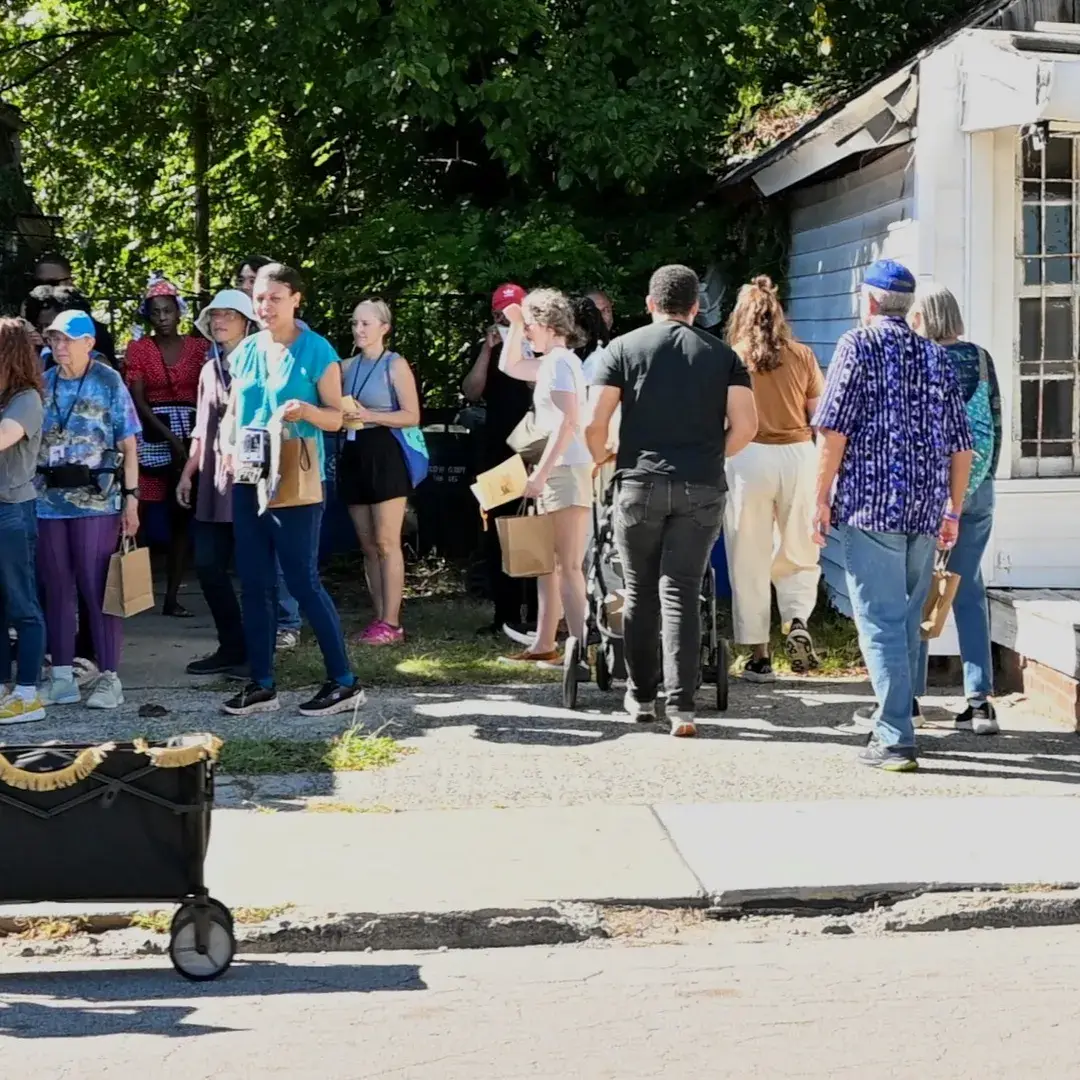
To celebrate Hope Valley's centennial, Preservation Durham is hosting our 2026 home tour in the neighborhood. The eight homes on this tour, all spanning from within 10 years of the neighborhood's establishment, represent the vision the Hope Valley designers had for the professional-class neighborhood.
Tickets are on sale now, with a discount for Preservation Durham members. General public tickets come with a one-year membership to Preservation Durham (for new members only).
Interested in volunteering for the home tour? Sign up to volunteer here!
Presenting Partner
Preservation Partner
George Watts Hill Circle
Preservation Friends
Sponsorship Levels:
Presenting Partner: $7,500
Preservation Champion: $5,000
Preservation Partner: $2,500
George Watts Hill Circle: $1,000
Preservation Advocate: $750
Preservation Friend: $500
Reach out to Julianne Patterson to learn more about joining our community of sponsors and supporting Preservation Durham’s work and programs.
Postcards From Durham: Local History Through Vintage Postcards
Join local street historian John Schelp at the Durham Main Library on Saturday, April 25th, from 4pm-5pm to explore Durham through an amazing collection of historic postcards. Co-hosted by Preservation Durham, the Museum of Durham History, and Durham County Library in celebration of Library Fest 2026 from April 20-25.
Shepard House Turns 100:
The Historic Heart of North Carolina Central University
Take a tour of the historic James E. and Annie Day Shepard House, the former home of NCCU founder Dr. James E. Shepard. Built in 1925 after the original president’s residence was destroyed by fire, the house has served as an important gathering place for university leaders, guests, and distinguished visitors throughout NCCU’s history. Now listed on the National Register of Historic Places, the Shepard House stands as a preserved tribute to the leadership, legacy, and vision that helped shape North Carolina Central University.
Andre Vann, university archivist, explains the history and significance of the home, and how it was preserved. You’re invited to explore the stories, and traditions that make this historic landmark a centerpiece of NCCU’s Centennial Square in the video below.
A group of residents and local volunteers gathered at Beechwood Cemetery along Durham's Fayetteville Street Corridor for a day of history sharing, cemetery preservation, and service. It marked the launch of a service-learning partnership between Hayti Promise Community Development Corporation and the National Trust for Historic Preservation's HOPE (Hands-On Preservation Experience) Crew.
Established in the late 1920s as the first public burial space for Durham’s Black residents, Beechwood Cemetery is a window into local history and heritage along Fayetteville Street, serving as the final resting place of influential Durham business and civic leaders such as North Carolina Mutual Life Insurance Company founders John Merrick, and C.C. Spaulding; James Shepard, founder of North Carolina Central University; and contemporary trailblazers like groundbreaking speech pathologist Dr. Carol-Ann Henderson Brockenborough. Read full article here.
1211 Fayetteville was the Durham home of Dr. Joseph Napoleon Mills, a notable doctor from Kinston, North Carolina. Dr. Mills came to Durham circa 1908 after attending the Leonard Medical School at Shaw University. Dr. Mills was a general practitioner who specialized in gynecology and obstetrics. He is said to have “...delivered somewhere between seven thousand and eight thousand babies, sometimes as many as three generations in the same family.” Dr. Mills worked at Lincoln Hospital and had his own private practice, both of which he retired from in 1961 due to worsening health. Dr. Mills was also the school physician at North Carolina College, now North Carolina Central University, from 1935-1958. Additionally, he served as the informal health officer at North Carolina College before 1935.
Dr. Mills’ family also lived in the home at 1211 Fayetteville Street. His first wife, Bessie Smith Mills, passed away in 1948. He then remarried in 1952 to Edna Rosser Mills. Edna was from Lynchburg, Virginia, and attended both St. Augustine’s College in Raleigh and North Carolina College in Durham, where she got her master's degree. She also studied at the following universities: Temple University, George Washington University, the University of Indiana, and the University of North Carolina at Chapel Hill, all through Carnegie and Rockefeller grants. Edna’s career was in teaching, and she taught at numerous public schools, including Payne School (Lynchburg, VA), Carver College (Rockville, MD), and North Carolina College, where she retired a few years before her passing. The home is also where they raised their three children: Dr. Amey Mills Winter, Joseph Mills, and Clinton Mills.
On September 3, 2023, a fire ignited in the attic of the house while undergoing renovation, causing severe damage to the property and halting the highly anticipated renovation of the home. The home is evidence of the Mill’s contributions to the Durham community, and we at Preservation Durham hope to see it renovated and flourish once again.
The Brewster Snow House was designed by architect Charles Barton Keen of Philadelphia, known for planning expansive country estates and suburban homes in NC and PA. Its asymmetric form, rough-cast stucco, half-timbered gables, and rustic stone chimney topped with a cluster of terra cotta pots make this Tudor Revival house a character-defining home in Hope Valley. Sue and Horace Snow were the first residents of the home starting in 1928. Horace worked at Liggett & Myers Tobacco Company, before moving into real estate and building the Art-Deco Snow Building on West Main Street in downtown Durham.
Built in the late 1930s for Hazel and John Wily, the Wily house is an elegant and relatively rare example of French Renaissance Revival architecture in Durham. It represents the variety of residential styles in the Hope Valley as one of the original 30 homes built in the neighborhood. The home’s many unique features include a steeply pitched roof with flared eaves, arched window openings, brick quoins at the corners, and brick dentil cornice molding. Mr. and Mrs. Wily lived in the home for over 40 years, and raised their three children there. The Wily house will also be on the 2026 Home Tour in Hope Valley.
Local events and news from us and our partners in preservation you may be interested in.
- Bring your family by for an engaging and FREE activity where you can learn, play, and explore Durham’s amazing history. Join the Museum of Durham History as they welcome local universities and businesses to set up shop at the Museum for Science Family Fun Day, on Saturday, April 11th, 10am-2pm as part of their public programming for Made in the Triangle: The Story of RTP! Each group will have a booth where adults and kids alike can check out their show and tell items — think robots, live bugs, slime and more!
- Exploring Durham through Postcards with John Schelp as part of Library Fest 2026, on Saturday, April 25th, 4pm-5pm.
- Get outside in the garden at Urban Community AgriNomics on Saturday mornings. Volunteers play a key role in cultivating sustainable gardens, supporting food security, and connecting people with nature. Whether you’re planting, harvesting, or helping at events, your time and energy help us build a healthier, stronger community. Sign up today to learn, grow, and make a difference with us!
- Preservation Durham 2026 Annual Meeting and Home Tour Lecture, Tuesday May 12 from 6pm-7:30pm at the Hope Valley Country Club.
- Preservation Durham’s annual home tour in Hope Valley, Saturday May 16 & Sunday May 17 from 12pm-4pm both days. Interested in volunteering for the 2026 home tour? Sign up to volunteer here.
- Join the Merrick-Moore Community Development Corporation (MMCDC) on the third Tuesday of every month at 7pm for engaging community meetings. Each session showcases guest speakers who provide valuable resources and information beneficial for both community members and MMCDC. Snacks and refreshments are provided at Mount Zoar Missionary Baptist Church.
- Duke Chapel tours: Learn about the history, architecture, and life of Duke Chapel in this docent-led tour offered regularly every Sunday after the 11am worship service, which ends at approximately 12:15pm. Tours last approximately 45 minutes, and are free and open to the public.
Copyright (C) 2026 Preservation Durham. All rights reserved.Want to change how you receive these emails?
You can update your preferences or unsubscribe