
February is Black History Month, and this year I have been thinking deeply about why history, especially the full and complicated story, matters so much. Earlier this month, NPR replayed an interview with Claudette Colvin following her passing. Colvin was just fifteen years old when she was arrested in Montgomery, Alabama, for refusing to give up her bus seat to a white passenger. When asked what gave her the courage to stay seated, she explained that her mind was “too full of Black history,” history she was learning in high school. She described feeling as though Sojourner Truth was on one side of her and Harriet Tubman on the other, holding her in place. I heard that interview while driving around Durham and had to pull over. It was one of the clearest reminders I have ever heard of how education empowers young people to recognize injustice, claim their agency, and change the course of history.
Claudette Colvin’s story highlights something I think about often in preservation, which is how rarely we engage directly with kids and young adults, even though early exposure to history can be transformative. Encouragingly, more and more of Durham’s youth are reaching out, eager to learn and get involved (especially with Open Durham!). Currently, we are working with students from NCCU, Duke, and UNC, and I am continually inspired by the social justice lens they bring to preservation work. When young people learn history early and see themselves reflected in it, it shapes how they understand place, power, and possibility, and helps them imagine their own role in shaping the future.
If you know me, you also know I get a little defensive when preservation is dismissed as elitist or inherently expensive. While it is true that preservation policies have often been shaped by exclusionary systems, that reality reflects who historically held power rather than the purpose or potential of preservation itself. At its best, preservation is a tool for empowerment. It helps people recognize the value of places that matter to them and affirms that their stories are worthy of care and protection. As Preservation Durham, our role is to provide the tools, resources, and platforms that help community members take action and to elevate stories that add depth and meaning to the places we share.
That is why I am so excited about We Built This: Profiles of Black Architects and Builders from North Carolina, opening today at the NCCU James E. Shepard Memorial Library. Produced by Preservation North Carolina and brought to campus by Preservation Durham in partnership with Hayti Promise Community Development Corporation, the exhibit highlights the Black architects, artisans, and builders who designed and constructed many of the historic buildings still standing across our state. Of the more than two dozen individuals featured statewide, over a quarter have direct ties to Durham, including Thomas Day, John Merrick, Bishop Henry Beard Delany, the Fitzgerald family, Gaston Alonzo Edwards, W. Edward Jenkins, Julian Abele, and Phil Freelon.
The exhibit spans several centuries, but it is not intended to be exhaustive. Instead, it serves as an invitation to continue researching, to uncover additional local stories, and to broaden our understanding of who shaped the built environment around us. By naming the people behind these places, we add context, complexity, and humanity to the landscapes we move through every day.
We Built This will be on view at the Shepard Library through the end of March, with an opening ceremony, weather permitting, on Tuesday, February 3 at 2:00 p.m. I hope you will come learn more about the people who built the places we inhabit and challenge yourself to seek out stories that may not be immediately visible. When I think back to Claudette Colvin, a teenager whose understanding of history quite literally kept her seated, I am reminded that the stories we choose to teach, tell, and preserve do more than inform. They equip people with the clarity and conviction to question injustice and imagine something better. That kind of empowerment has always been powerful, and it has always been something worth protecting.
With gratitude,
Lowe’s Grove:
Earlier this month the DPS Board of Education received a presentation from the UNC School of Government’s Development Finance Initiative (DFI) to conduct a Phase 1 Feasibility Analysis evaluating redevelopment options for Old Lowes Grove. DPS is partnering with Durham County on this effort, with the County funding the analysis. Notably, board discussion also indicated interest in expanding the scope to include Durham School of the Arts (DSA) and Northern High School.
This is exactly the kind of third-party engagement and independent analysis we have been advocating for in meetings with the DPS Board and administration over the past year and a half. The feasibility study for Old Lowes Grove is moving forward and will serve as an important test case for how DFI can support DPS in making informed decisions about vacant historic school properties. While we are still waiting to see when a similar process will begin for DSA, January 15th’s meeting was an encouraging sign that this work is finally getting underway.
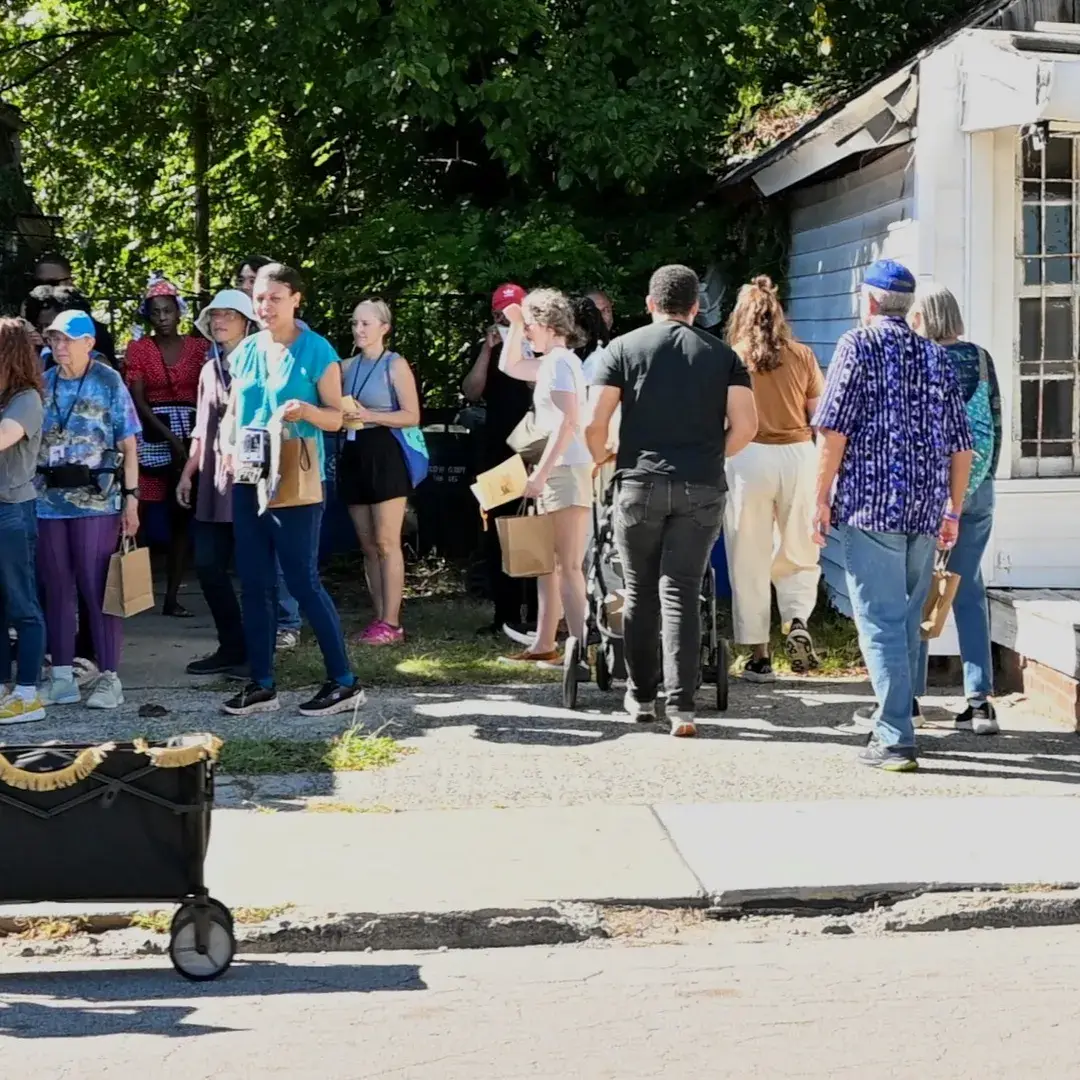
Join Preservation Durham as we celebrate the 100th anniversary of Hope Valley with this year's home tour! Started in 1926, the community was built around the Hope Valley golf course, and was explicitly designed to accommodate the rise of the automobile in the early twentieth-century United States. From its inception, Hope Valley has been defined by incredible period revival homes; many of the originals designed by Durham architect George Watts Carr. Hope Valley is one of the twenty national register historic districts in Durham, an indication of its rich and integral role in Durham's history.
To celebrate Hope Valley's centennial, Preservation Durham is hosting our 2026 home tour in the neighborhood. The eight homes on this tour, all spanning from within 10 years of the neighborhood's establishment, represent the vision the Hope Valley designers had for the professional-class neighborhood.
The home tour takes place on May 16th-17th, 2026, from 12-4 pm each day. Early bird tickets are on sale now, with a discount for Preservation Durham members. General public ticket comes with a one-year membership to Preservation Durham. This offer is for new members only and cannot be used to renew an existing lapsed membership. Ticket prices will increase starting April 1st.
Sponsorship Levels:
Presenting Partner: $7,500
Preservation Champion: $5,000
Preservation Partner: $2,500
George Watts Hill Circle: $1,000
Preservation Advocate: $750
Preservation Friend: $500
*Advertisement options in
Home Tour program booklet
If you’re interested in joining our community of sponsors and supporting Preservation Durham’s work and programs in 2026, including receiving benefits at the annual home tour featuring Hope Valley’s Centennial May 16-17, reach out to Julianne Patterson or click here to learn more.
A HUGE thank you to Preservation Durham’s 2025 Sustaining Sponsors!
1218 Fayetteville Street was the home of Frederick K. and Parepa Watkins. Frederick, known as ‘The Movie King,’ became the most prolific theater owner in North Carolina. Before arriving in Durham, F.K. Watkins grew up in the small town of Russum, Mississippi, and later attended Alcorn A&M College (now Alcorn State University), the first Black land grant college in the U.S.
F.K. Watkins House
1218 Fayetteville Street c. 1913
He first owned the Electric Theater in 1913, the second Black American movie theater in North Carolina, and the Wonderland Theater. These theaters gave Hayti residents, and Black Durham more broadly, viable access to cinema and entertainment when white theaters often refused or gave substandard service to Black patrons. Watkins later expanded across North Carolina and other states on the East Coast, owning theaters in Raleigh, Chapel Hill, Apex, High Point, Goldsboro, Wilson, and Reidville, as well as South Carolina, Virginia, and New Jersey. He worked in other professions as well, notably as a real estate agent, presiding over the King Real Estate Company. Watkins was also known for hosting pageants and parades where he wore a fez and tassel and rode a horse.
Parepa Watkins grew up in Greensboro, NC, and attended Bennett College, where she earned a Latin Normal Diploma. Mrs. Watkins also received her B.A. from North Carolina College (now NCCU) and her M.A. from Columbia University in New York. She began her career in public education in Greensboro, then moved to Durham to teach at East Durham School (now Burton Elementary) in 1930, where she would also become principal. Parepa also taught at and became principal of Whitted Elementary before serving as the first supervisor for Black elementary schools in Durham. The community named the street where Burton Elementary was located in reverence for Mrs. Watkins’ service.
Built in 1937, this two story brick home in Trinity Park was for Mary Louise Carswell, A. Paul Carswell, and their two sons Paul Jr. and James. The Carswells lived in this Colonial Revival-style home for 40 years, and owned and operated Carswell Drug Company at the corner of Angier Ave. and Driver St. Carswell Drug Company received recognition and appreciation from other local businesses for using their services to open the drugstore, as seen in the March 3, 1949 edition of The Durham Sun newspaper below:
Mary and Paul Sr. were married in Winston Salem in 1927. Their son Paul Jr. was born in Charlotte in 1929, and his younger brother James was born after the family settled in Durham. Paul Jr. and Mildred Augusta Koon celebrated their wedding in 1956, and had three children before Paul died in a car accident in 1969. James married Anne Jeffreys Baker in 1957 in the chapel of Trinity Methodist Church. The newlyweds graduated from Durham High School, before Anne attended Woman’s College of the University of North Carolina, and James attended Campbell College and served two years in the US Navy. After Paul Sr. and Mary moved out of 1101 Englewood Ave in the 70’s, the property was owned and cared for by the Smiths, the Dobbins, and other families.
“The clubhouse was built in 1926, a classic French Norman design, and today encompasses 52,000 square feet of recreational facilities. Designed by renowned architect Aymar Embury II, it is a building that has adapted well to changing lifestyles while it retains unique features such as the cathedral ceilings and exposed beams of the expansive club room.”
Courtesy, Hope Valley Country Club
Hope Valley was one of the earliest neighborhoods in NC built for homeowners with automobiles. In 2009, it was listed on the National Register of Historic Places. The clubhouse held a grand opening in July 1927 showcasing the large new brick and stucco building with signature columns and beams.
Courtesy Special Collections at Syracuse University, Aymar Embury Collection, via Tad DeBerry
Local events and news from us and our partners in preservation you may be interested in.
- The Museum of Durham History invites the public to an evening of conversation and discovery, exploring the origins of one of North Carolina’s most influential innovations, Research Triangle Park. The Early History of RTP: A Fireside Chat, brings together individuals closely connected to Research Triangle Park’s formative years for an intimate discussion of the Park’s beginnings and its evolving relationship with Durham. Thursday, February 5th 6-8pm, Register Here.
- Black History Month Guided Tours at the Pauli Murray Center: Hosted by Executive Director, Angela Thorpe Mason, tours will focus on key pieces of Pauli Murray's life and legacy as an African American, in honor of Black History Month. Visitors will be guided through the interior exhibit and historic space. Time for questions and interactive reflection will be included in the time spent together. Register Here.
- Bull City Brews: A Taste of Durham’s Past: Durham has been a city of constant creativity and innovation since 1869. From its origins as a tobacco boom town and home to the most successful Black Wall Street in the country, to its modernization as a place for ingenuity, recreation, and entertainment, Durham has the stories you won't want to miss! Put on your walking shoes as our historic guides take you on a tour through the Bullpen Social District to learn about Durham's past while enjoying beverages from several local spots. Hosted by historians from West Point on the Eno. Saturday, February 28th 3pm-6pm,Register Here.
- Green space information and resources provided by the Hayti Promise Community Development Corporation:Durham Rooted Faith ProjectRedlining and Greenspace in Durham, NCTree Coverage maps from Durham Neighborhood Compass
- Historic Stagville Tours: In 1860, Stagville was part of a vast plantation where the Bennehan and Cameron families enslaved over nine hundred people. Once one of the largest plantations in North Carolina, Historic Stagville now inspires new understanding about the history of slavery through preservation, interpretation, research, genealogy, and descendant engagement. Historic Stagville is a Site of Conscience and a site of memory.
- Friends of Geer Cemetery is continually seeking descendants of people buried in Geer Cemetery. Geer Cemetery is a historic African American burial ground in Durham NC that was used by the community beginning in the late 1800s. If you are a descendant of someone buried in Geer Cemetery, we would love for you to connect with us. Friends of Geer Cemetery strives to preserve both the physical sacred space and life stories. The Descendants Council gives descendants a chance to hear and provide input about the preservation efforts and the opportunity to share their ancestors’ life stories. To receive email announcements of our monthly meetings, or for more information, contact us at descendants@friendsofgeercemetery.org.
- The James E. Shepard Memorial Library at North Carolina Central University (NCCU), in collaboration with Hayti Promise Community Development Corporation and Preservation Durham, is launching Black History Month by elevating the stories of Black architects, builders and craftsmen who helped shape North Carolina’s historic landscape through the traveling exhibit, “We Built This: Profiles of Black Architects and Builders in North Carolina.” The free exhibit will be on display from Sunday, Feb. 1st, - March 31st, in the James E. Shepard Memorial Library, located at 209 Eagle Campus Drive.
Copyright (C) 2026 Preservation Durham. All rights reserved.Want to change how you receive these emails?
You can update your preferences or unsubscribe