Impact Global Health Alliance
Two Days Later, She Walked Home

After leaving her home, Alejandra walked for hours, finally arriving at the Casa Materna late at night. The Casa Materna is a community birthing center managed by our alliance partner, Curamericas Guatemala. She was 22 years old and 38 weeks pregnant with her third child. Her contractions had begun the evening before, in San Jose — one of the more remote communities in the mountains of Huehuetenango, Guatemala, and hours away from the nearest hospital. These poorly maintained roads make travel nearly impossible or unaffordable.
For generations, women in villages like hers had only one option when labor began: deliver at home and pray nothing would go wrong. In this region, and far too often, something did. Postpartum hemorrhage — severe bleeding after childbirth — remains the leading cause of maternal death in Guatemala where maternal mortality rates were once among the highest in the world, until our Casa Maternas opened.
But Alejandra had another option. She set out on foot through the night for the Casa Materna. She chose it because she trusted the people inside. The staff speak her language. The rooms feel like a home, not a hospital. The care she receives is low cost and free of fear and anxiety which keeps so many Indigenous Mayan women from seeking medical help at all.
When she arrived, the Casa Materna team welcomed her and helped her prepare. The lights were intentionally kept low, helping her to feel at home. The staff stayed calm and close by. A few hours later, Alejandra delivered a healthy baby boy and held him against her chest.
Then something changed.

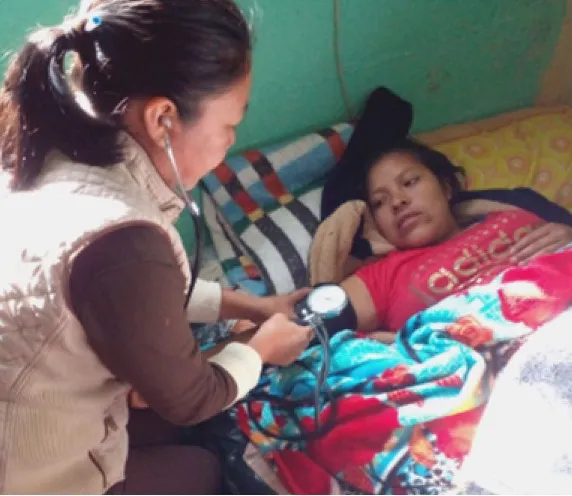
Not long after the birth of her baby boy, Alejandra began feeling dizzy and nauseated. A sharp pain spread through her abdomen. The staff immediately recognized the signs of postpartum hemorrhage. In a village home, hours from help, this is the moment a mother’s life is most precarious and may be lost.
The team moved quickly. They gave her intravenous saline to support her blood pressure, and intravenous oxytocin, a medication that caused the womb to contract, enabling her hemorrhage to stop. Almost simultaneously, an anti-shock garment was applied — a simple wrap that compresses her lower body to slow blood loss and maintain blood pressure until her bleeding was brought under control. And then they did something just as important: they stayed. All night, they monitored Alejandra and her newborn son.
Two days later, she was strong enough to walk home with her baby in her arms. Her family thanked the staff profusely for saving her life, and for their calm and professional care, during her most frightening night. Alejandra is one of 408 mothers who delivered at the Casa Maternas last year. Behind each of those births is a small team on call around the clock — most earning less than $500 a month. Since 2009, the Casa Maternas have managed over 635 obstetric emergencies like Alejandra’s, in communities where there is nowhere else to go.
The mountains have not moved. The nearest hospital is still hours away. What changed is what stands in between: a lit doorway, trained staff, and equipment and medications that cost little but mean everything.
Your gift helps keep the doors of our Casas Maternas open for the next mother who walks through the night seeking help, and ensures that when she arrives, lifesaving care is waiting.