Southern Coalition for Socialjustice
Stokes County Commissioners Approve Hyperscale Data Center Development

Environmental Justice
STAY INFORMED
Stay up to date on our work with Southern communities.
Melissa Boughton
Katie Crisp
DANBURY, N.C. (Sept. 14, 2026) — The Stokes County Board of Commissioners voted 3-2 Monday night to silence its own community and approve a massive hyperscale AI data center known as Project Delta.
The highly contentious project converts 1,850 acres of residential-agricultural land along the imperiled Dan River into a heavy-industrial conditional zoning district. The approval follows both the Stokes County Planning Board’s 5-2 recommendation to deny the project and a three-hour public hearing last week, where residents filled every minute of allotted comment time and the vast majority of speakers and attendees opposed the proposal.
At the Sept. 8 public hearing, Stokes County residents laid out the project’s potential environmental, public health, and economic impacts. The approval industrializes a swath of the county roughly the size of 1,395 football fields, and larger than the nearby Town of Walnut Cove.
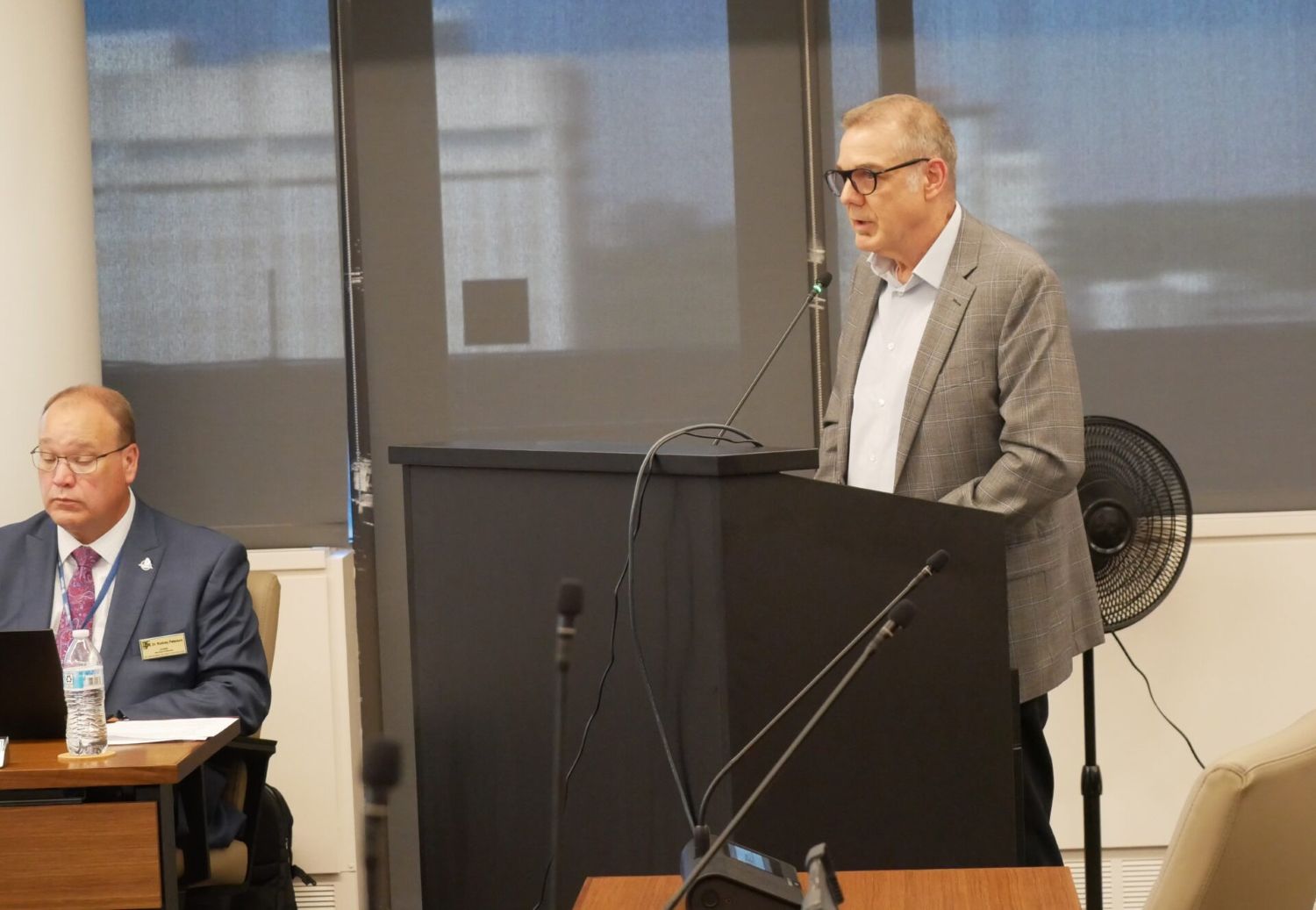
County Commissioner Brad Chandler tried to reason with the rest of the Board to take a step back and pause on making a decision to approve the project, especially considering new proposed conditions in the application.
“I don’t appreciate being rushed with changes like this, of this magnitude,” he said at the meeting. “To be honest with you, I mean I don’t know every single thing that was changed in here, and no one has said what’s been changed in here. So, do we all go back and reread this again so we know what we need to question now, or not? To me, this is unacceptable.”
Tim Mabe, a Walnut Cove resident, warned commissioners that studies show gas turbine exhaust of the size associated with Project Delta harms residents more than two miles out, a radius that easily reaches Walnut Cove’s three schools.
“Your yes vote on Project Delta will be with you for the rest of your life,” Mabe said. “[Your] yes vote can make two rich people richer or you can protect all of Stokes County.”
An economic report released by the Southern Environmental Law Center (SELC) on Sept. 3 found the data center would generate a fraction of the promised local tax revenue, create few lasting local jobs, and drive down property values while increasing pollution. Dr. Michael Hicks, Director of the School of Business and Eldon R. Lindsey Professor of Economics at Shenandoah University, conducted the analysis. Many Stokes County and Walnut Cove residents echoed the report’s findings, questioning how much Project Delta will actually benefit their community.
This is the second time commissioners have approved Project Delta on a 3-2 vote, with the same commissioners on each side. Their first approval in January was voided after community members and nonprofits sued, represented by Southern Coalition for Social Justice (SCSJ) and SELC. The court adopted a joint consent order that voided the rezoning and included new procedural safeguards, including requiring the county to hold the Sept. 8 special hearing with three hours reserved for public comment.
“Stokes County residents have fought this rezoning with fortitude and resilience and have done everything possible to open the Commissioners’ eyes to the potential harms from Project Delta,” said Anne Harvey David, Chief Counsel for Environmental Justice at SCSJ. “The Commission failed them tonight. But for the past year, this community has shown up for each other, again and again, across the political spectrum, and stood their ground for what’s right. They won’t stop now, and we are proud to stand with them in their fight for justice for their community.”
“This decision industrializes one of North Carolina’s most special and significant historical sites — sacred to the Saura people and descendants of enslaved members of the Hairston and Bailey families,” said Megan Kimball, Senior Attorney at SELC. “For half a century, residents here have borne the pollution from Duke Energy’s power plant. Now they face what would be one of the largest data centers in the nation — and with it, the real threat of air pollution from noisy generators near their homes and contamination of the Dan River, a drinking water source and growing tourist draw. All for empty promises that independent economic analysis has already shown won’t bear out. The people of Southeastern Stokes County deserve better.”
Southern Coalition for Social Justice came together in 2007 to give Black, Brown, and low-income people better resources in the fight for justice across the South. We are lawyers, social scientists, and communications professionals working to dismantle racism and oppression in the criminal legal system, in our environment, and at the ballot box. Learn more at southerncoalition.org and follow our work on Facebook, Instagram, YouTube, and LinkedIn.
The Southern Environmental Law Center is one of the nation’s most powerful defenders of the environment, rooted in the South. With a long track record, SELC takes on the toughest environmental challenges in court, in government, and in our communities to protect our region’s air, water, climate, wildlife, lands, and people. Nonprofit and nonpartisan, the organization has a staff of 250, including more than 160 legal and policy experts and advocates, and is headquartered in Charlottesville, VA, with offices in Asheville, Atlanta, Birmingham, Chapel Hill, Charleston, Nashville, Richmond, and Washington, DC. Learn more at selc.org.