Master Gardener Volunteers of Cobb County
Right Plant + Right Place = Gardening Success
Gardeners are often told that the key to gardening success is planting the right plant in the right place.
Although this sounds simple, a lot goes into deciding what plants to use and where to plant them. A gardener needs to consider the characteristics each plant should have. The plant also needs to meet the gardener’s needs and preferences while thriving in the available growing conditions.
Start With the Characteristics, Not the Plant
Most gardeners do not have a plant encyclopedia in their heads. It is nearly impossible to look at a situation and immediately come up with a list of appropriate plants.
Yet, when planning a landscape project, gardeners often try to choose specific plants very early in the process.
This way of thinking is common when someone asks me to recommend a good shade tree. The question cannot really be answered without knowing more about what the person needs the tree to do.
Trying to choose a plant this way is like walking into a shoe store and asking for a good pair of shoes. The salesperson needs to know your size, what you will be doing in the shoes, your personal taste, your budget and other factors before making a recommendation.
The same is true when choosing plants.
Rather than immediately looking for a specific plant, first think about the characteristics the plant needs to have. Then find a plant that matches those characteristics and will thrive in the location where it will be planted.
Don’t Let the Nursery Make the Decision
Wandering around a nursery and waiting for inspiration to strike can be risky. This is especially true if you do not already know what characteristics you need in your plants.
Plants are sometimes selected because they are:
- Particularly attractive at the moment
- Something the gardener simply falls in love with.
Unfortunately, those plants may eventually grow too large. They may need more or less sunlight than the location provides. They may also have some other characteristic that makes them a poor choice.
Start With the Shade Tree
For example, let’s go back to the question about a shade tree.
Average shade trees range from 35 to 60 feet tall. That is quite a range, so you need to decide early on what size tree will fit best in your landscape.
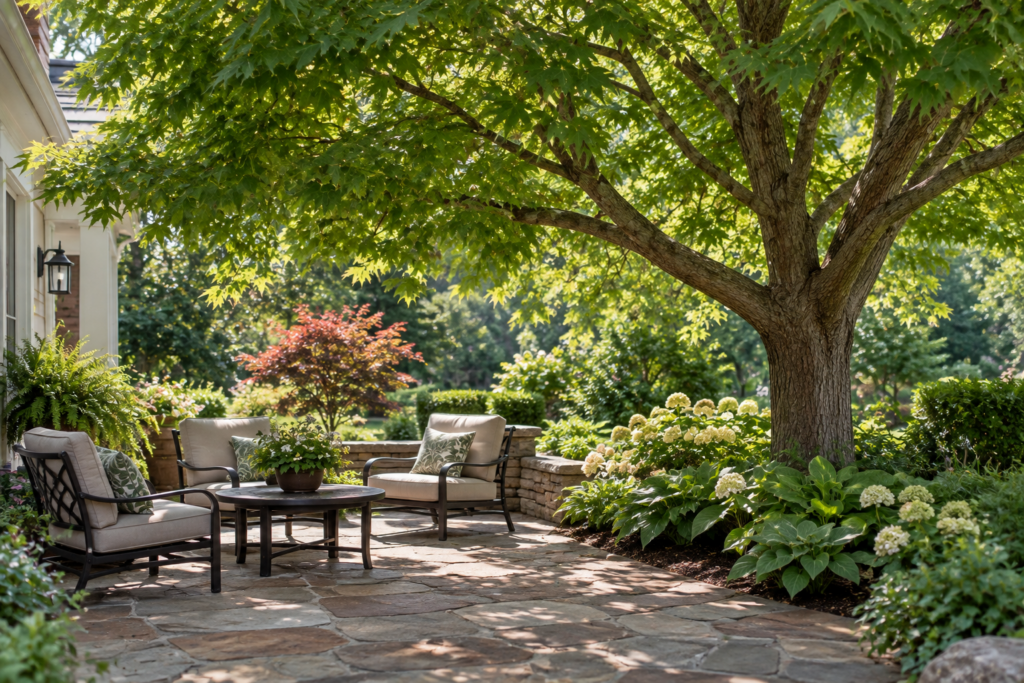
If the tree is intended to shade a small patio, a smaller tree that grows 15 to 25 feet tall may be a better choice.
You also need to consider several other characteristics:
- Size: How tall and wide will the tree be when mature?
- Growth habit: Should it grow upright, or would a spreading form be better?
- Evergreen or deciduous: Do you want a tree that keeps its leaves year-round, or one that loses them in winter?
- Flowers and fruit: Are attractive flowers or fruit important to you?
- Fall color: Would you like colorful fall foliage?
- Bark: Is interesting bark a desirable feature?
- Fragrance: Would fragrant flowers or foliage be a plus?
- Wildlife value: Will the tree provide food or shelter for birds or other wildlife?
- Growing conditions: Is the planting site well drained or wet? How much sunlight does it receive?
- Adaptability: Is the tree well adapted to our area?
Make a List Before You Shop
To continue with our tree example, start by making a detailed list of the characteristics you want. Then take that list to a nursery or contact a horticulturist for help selecting a tree.
You will find the process much easier.
Instead of trying to choose from every tree available, you can narrow your options to the two or three trees that best fit your needs and growing conditions.
Sometimes, when all the factors are considered, there is only one tree that meets the requirements. The decision is then easy.
It is much more useful to ask:
“What is a good shade tree that grows to about 40 feet, is deciduous, produces attractive flowers or fruit and is well adapted to our area?”
Now you have given enough information to make a useful recommendation. A red maple (Acer rubrum), for example, would fit that general description.
Use This Approach for Every Plant
You can use this decision-making process to choose almost any type of plant for your landscape.
Whether you are selecting shrubs, ground covers, flowering annuals, perennials or lawns, this approach can help you avoid mistakes. Landscape mistakes can be difficult and expensive to correct later.
Of course, this does not mean you should never make a spur-of-the-moment plant purchase.
I cannot tell you how many times I have bought a plant and then wandered around my landscape trying to find the perfect place to plant it. That is part of the fun of gardening!
I would not, however, choose trees, shrubs, or ground covers for a major planting that way.
A Simple Process for Choosing Plants
The next time you are planning a planting project, try this approach:
- Identify the location. Consider sunlight, moisture, soil and available space.
- Decide what you want the plant to do. Do you want shade, privacy, flowers, wildlife habitat or something else?
- List the characteristics you need. Think about mature size, growth habit, foliage, flowers and other features.
- Find plants that match your list. Ask a knowledgeable nursery professional or horticulturist for help if needed.
- Choose the plant that best fits the site. Make sure it will thrive in your growing conditions.
This approach takes a little more thought at the beginning, but it can save you from making costly mistakes later.
Now Is a Great Time to Plan
Remember that November through February is the prime planting season for hardy trees, shrubs, ground covers and perennials in our area. That makes it a great time to work on landscaping projects.
Before you head to the nursery, take a little time to think about what you need your plants to do. Consider their mature size, sunlight requirements, water needs, appearance and other characteristics that matter to you.
Then find the plants that fit your list.
Books about plant materials can also help. You can find them at local bookstores or online. One of my favorites is The Southern Gardener’s Book of Lists by Lois Trigg Chaplin. It is a great resource to help you get started.
The next time you are tempted to ask, “What is a good plant for this spot?” try asking a different question:
“What characteristics does the plant need to have?”
That small change in thinking can make choosing the right plant much easier.