Brain Injury Association of North Carolina
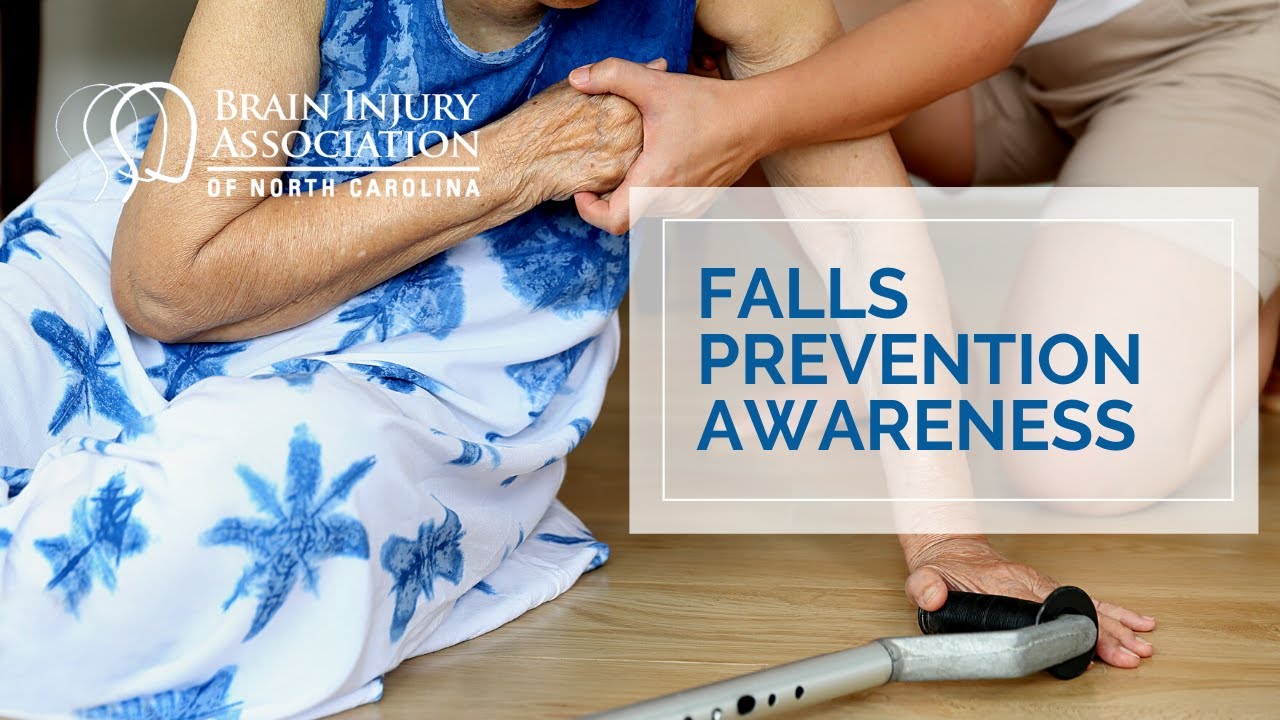
Falls Prevention Week 2020
Couple of questions before we get started:
- Are you an adult over the age of 65?
- Are you living with a disability due to brain injury?
- Are you a human being?
If you answered "Yes" to any of these questions - you are at risk for falls and should read this information!

Why does Falls Prevention Matter?
A couple more questions:
- Have you ever lost your footing on flat or changing level ground?
- Have you almost slipped on something wet, icy, or slick?
- Have you ever been in an elevated location, like a balcony or a ladder?
- Have you ever stumbled on something that was on the ground - either a rug, clutter, pet, or child?
- Have you ever rode a bike, electric scooter went skiing, running, or something that put you faster than zero miles per hour?
Falls are all around us, happening when we least suspect it. No one wakes up in the morning, anticipating a fall. Most falls likely have little to no serious consequences, making them seem like no big deal. However, just as quickly as falls happen, so too can a traumatic brain injury, or TBI.

What's a Traumatic Brain Injury?
An acquired brain injury, or ABI, is an injury after birth that is not hereditary, degenerative, or induced by birth trauma. When the head is hit or the brain is damaged, how the brain functions and communicates with the rest of the body may become changed. ABI is used as the umbrella definition for brain injury and can be further defined by how the injury is sustained:
Traumatic Brain Injury (TBI):
caused by sources outside the body - falls, motor vehicle accidents, violence, etc.
Non-traumatic Brain Injury:
caused by sources inside the body - strokes, aneurysms, tumors, loss of oxygen, etc.
With TBIs, a hit to the head can result in different severity of injury - mild, moderate, or severe. Mild TBIs are the most common form of brain injury, often presented as concussions. Despite the high prevalence, these mild TBIs can be difficult to detect for a lot of different reasons:
- Symptoms with mild TBI are often invisible to the outside eye, making them difficult to explain or understand. nausea, dizziness, vision disturbances, mood fluctuation, trouble sleeping, balance trouble, trouble with attention/memory, sensitivity to light/noise/movement, etc.)
- nausea, dizziness, vision disturbances, mood fluctuation, trouble sleeping, balance trouble, trouble with attention/memory, sensitivity to light/noise/movement, etc.)
- Some people can experience limited to no loss of consciousness (blacking out for a period of time)
- Detection can be difficult on first line neurological scans (for example - Computed Tomography, or CT, scans are often looking for bleeding or large structural damage within the brain). For those with injury like stretching or chemical adjustments, different tests may be required
- There can be a wide range of symptoms and severities even within this category. Majority of people have symptoms resolve within 1-2 months. However, for 10-15% of cases, long-term symptoms can be more difficult to manage.
- Treatment and access to treatment can be varied. For example, a person might be at a primary care physician's office, emergency department, urgent care facility, or go untreated or present as another condition (such as mental health, substance misuse, etc.).
Moderate and severe TBI are often less difficult to detect, often requiring hospitalization or inpatient rehabilitation. They can result in periods of blacking out/coma for more than 30 minutes and 24 hours respectively, and show up on neurological scans more overtly.

What is like after a Brain Injury?
Different parts of the brain are responsible for different functions a person can perform, such as a person’s movements, emotions, processing of the sounds/sights around, starting or holding a conversation, or being able to pay attention or remember information.
When the brain is injured, like after a big fall, tasks may be more challenging than prior to injury affecting daily life and relationships. There are different ranges and challenges that brain injury can present in various ways from person to person.
- For some people, it can feel like a TV with the wires in the wrong place – your thoughts and your actions can feel disconnected.
- For others it’s like being on slow WiFi – taking a long time to process and can feel frustrating to try simple tasks.
- Other people might get overwhelmed by a lot of stimulation like crowds, noises, or lights – feeling like a waterfall of senses that later results in this tired feeling or like they are driving through a dense, morning fog.
- They might have a tough time finding the right words or communicating with others, almost like their brain is a room filled with unorganized file cabinets and having to sift through every folder.
- For others, it might just feel like a car with the breaks and accelerator pedals switched related to their decision-making and emotions – looking like impulsivity or disruptive behaviors.
Though there can be a lot of negative aspects and changes after a brain injury, there are people that experience positive changes as well. Some people with depression, substance use, or difficult mental health challenges prior to injury, experience a peace, stronger relationships or spirituality, and less mental health challenges. It just depends on the person.
Repetitive training and strategies to help compensate for change in function can form new pathways within the brain to facilitate rehabilitation.

What's the Connection between TBI & Falls?
According to the CDC,
- One out of five falls causes a serious injury such as broken bones or a head injury.
- Over 800,000 patients a year are hospitalized because of a fall injury, most often because of a head injury or hip fracture.
- Falls are the most common cause of traumatic brain injuries (TBI). In 2014, falls accounted for almost half (48%) of all TBI-related emergency department visits. Falls disproportionately affect children and older adults:
- In 2014, falls accounted for almost half (48%) of all TBI-related emergency department visits. Falls disproportionately affect children and older adults:
- In 2015, the total medical costs for falls totaled more than $50 billion. Medicare and Medicaid shouldered 75% of these costs.
- Each year, 3 million older people are treated in emergency departments for fall injuries.
- Common locations for elderly falls: 60% of falls happen inside the home 30% of falls occur outside the home, within a community setting (for example, while shopping or walking on the street) 10% in a health care center such as a hospital, clinic, or nursing/rehabilitation facility
- 60% of falls happen inside the home
- 30% of falls occur outside the home, within a community setting (for example, while shopping or walking on the street)
- 10% in a health care center such as a hospital, clinic, or nursing/rehabilitation facility
- Types of falls: 43% at ground level or first-floor falls (not from a height) 14% on or from stairs or steps 11% on curb or sidewalk 9% from a chair, bed, or furniture 4% involving the bath, shower, or a toilet 26% “Other” (including unspecified types)
- 43% at ground level or first-floor falls (not from a height)
- 14% on or from stairs or steps
- 11% on curb or sidewalk
- 9% from a chair, bed, or furniture
- 4% involving the bath, shower, or a toilet
- 26% “Other” (including unspecified types)
For people living with disabilities,
- 30-65% of people with brain injuries reporting balance challenges at some point during rehabilitation.
- Fifty percent of the people who experience stroke are at risk for falling.
- 50-60% of injuries reported in people with Intellectual Developmental Disability (I/DD) are due to falls.
- Injury due to falls represents one of the leading causes of liability claims against group homes and other care providers.

Who's Most at Risk for Falling & How can They be Prevented?
Safety and prevention starts with you. You are the only one who can choose to live safely in order to live a long, independent, and full life. A quick and easy “what not to do” is likely found by watching America’s Funniest Home Videos – a constant video loop of people falling… Real falls prevention is like a word search - challenging to see the words through all the seemingly randomized letters. But with some extra time and awareness, you start to make words out of that sea of jumbled letters. There are a lot of little ways and steps that you can take to prevent falls, that when done all together create an atmosphere of safety as a habit – whether preventing a first injury or another one. The table below discusses what characteristics might lead to increased fall risk and some prevention strategies.

When is a Fall more than a Fall?
What does it feel like after a concussion? Some people experience physical changes that are easily noticeable like a swimming, 3D-like, blurred, or double vision. They might have significant head pain or are overstimulated by lights, sounds, or motion. They might feel really tired, nauseous, or overall really dizzy or unbalanced. Other challenges that might show up within or after 24 hours might be trouble sleeping, altered thinking or processing, or fluctuating mood.
Any of these symptoms after falling or hitting your head could be a sign to seek medical attention.
Concussion Signs Observed
- Can’t recall events prior to or after a hit or fall.
- Appears dazed or stunned.
- Forgets an instruction, is confused about an assignment or position, or is unsure of the game, score, or opponent.
- Answers questions slowly.
- Loses consciousness (even briefly).
- Shows mood, behavior, or personality changes.
Concussion Signs Reported