The giving experience on Collective (Part 1: Checkout)
A donation interface is meant to start a relationship, not close a sale. That should be obvious. Yet almost every donation online is built to do the opposite: take the money and end the interaction. We already know a better model works, because the creator economy spent the last decade proving it. Patreon turned an audience of fans into real businesses with one move. Instead of asking people to buy something once, it asked them to join, to back a creator every month in exchange for access, community, and a seat close to the work. The tiers carried genuine value, so paying again wasn't a chore. It was the entire point. More than 10 million patrons now support creators this way, and they've sent over $10 billion through the platform, almost all of it recurring. That is a genuinely new fact about how people behave. A decade ago, "subscribe every month to a person whose work you believe in" was not something most people did. Today it's the default economic relationship of the entire creator world, and north of 90% of the money flowing to creators arrives that way, month after month, on purpose. We believe that this makes what occurs in the nonprofit sector hard to explain. No one has a stronger claim to that kind of relationship than a mission-driven organization. A creator offers entertainment. A nonprofit offers a cause someone has built their values around: a food bank, a school, a cure. The bond runs deeper, the reason to stay is bigger, and the impact is unmistakably ongoing. If any relationship on earth should run on recurring support, it's this one. And yet at the average nonprofit, recurring giving is around 13% of revenue. Fewer than one in five supporters ever joins in the way that, in the creator economy, nearly everyone does. This isn't a donor problem. The sector is excellent at keeping the people it manages to set up as recurring: monthly donors are retained around 80% a year, give for close to eight years on average, and are worth roughly twice a one-time donor over a lifetime. The relationships work beautifully once they begin. The problem is that they so rarely begin, and we believe that the status quo for interfaces available to organizations is a large reason why. So we built Collective's giving experience around the move the creator economy got right: turning a one-time ask into an invitation to join. On Collective, we have taken donor education seriously. We think organizations should have the option to communicate what giving at a particular level means to them, and could mean for the donor. Tying each gift to a concrete outcome is the highest-leverage choice on the page. Across experiments with more than two million PayPal users, Stanford researchers found that showing a donor a concrete figure for what a gift does — "$1 provides two people clean water for a year" — nearly quadrupled the rate of giving versus showing nothing, and beat written descriptions of the same impact by close to 60%. The same research found the part that matters most to us. A better first giving experience made donors come back and give again for as long as eighteen months afterward. Get the start right and the relationship does much of the rest on its own. This is what makes recurring natural instead of forced. The work a gift pays for is almost never a one-time event. A garden gets watered every week. A student gets tutored all year. A shelter keeps the lights on in December and January both. When a giving level is tied to ongoing work, an ongoing gift is just the honest version of it, and recurring stops being something you have to talk a donor into. It becomes the obvious shape of a commitment they already want to make. The most meaningful relationships in a person's life should work like the ones they already pay for every month. For nonprofits, they never have, because the software to run them didn't exist. That's what we set out to build. Next in the series: what a supporter actually comes back to — the content and community that live inside a Collective space. After that, how to run the whole thing from your own site.

 The Collective Workshop

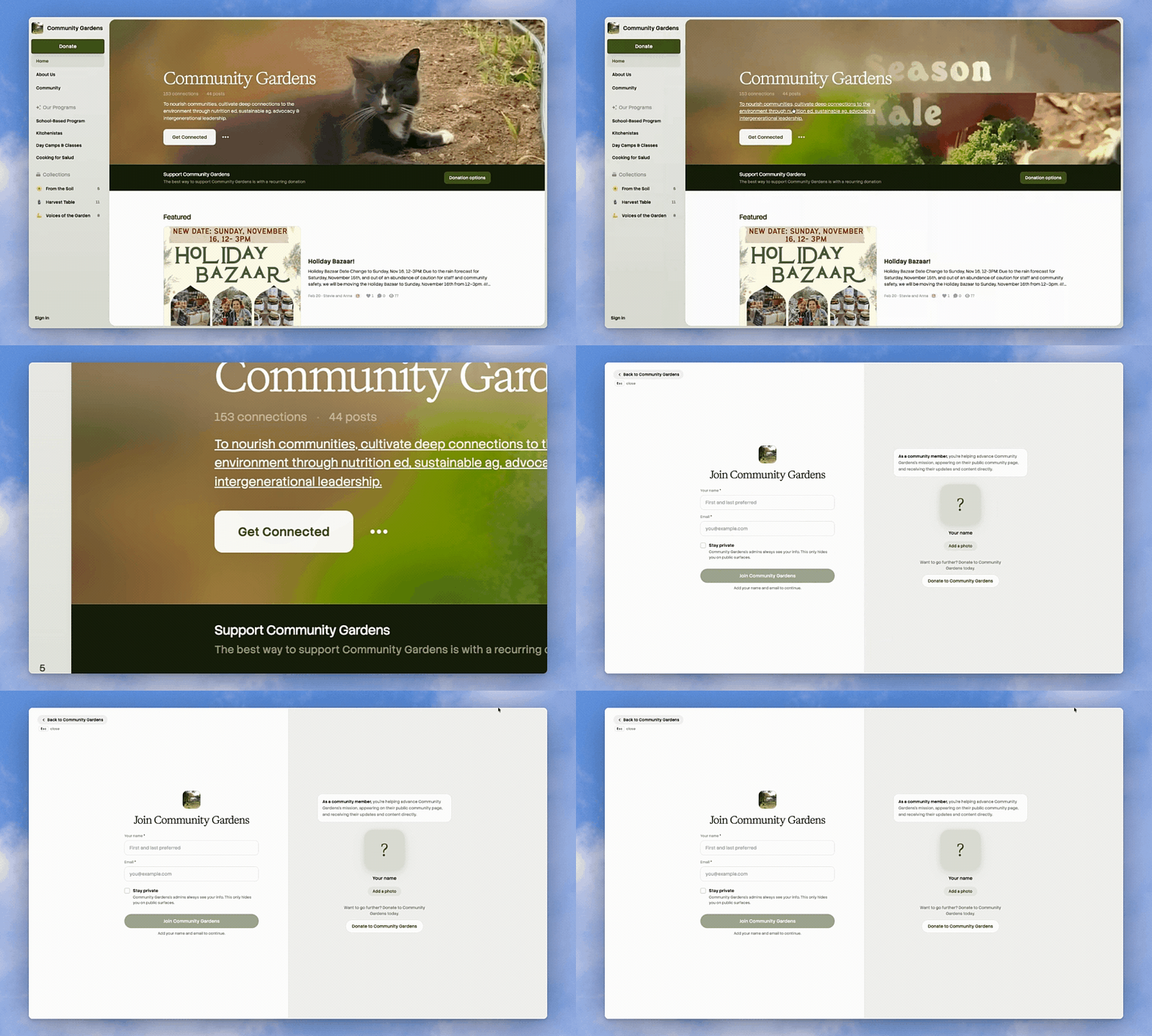
 Introducing Collective: the new home for mission-driven workJul 11, 20256 likes
 Fans Cheer for Teams. Donors Do Too.Jul 17, 20254 likes
 UndervaluedJul 16, 20254 likes
 Why Sarah is Building CollectiveJul 16, 20254 likes
 UnrestrictedJul 15, 20253 likes
 Nonprofits should care about the creator economyJun 172 likes
 Why Daniel is building CollectiveJul 16, 20252 likes
 Why Malik is building CollectiveJul 14, 20252 likes
 The Engagement Mirage: When Likes Don’t Transfer to DonationsJul 11, 20251 likes
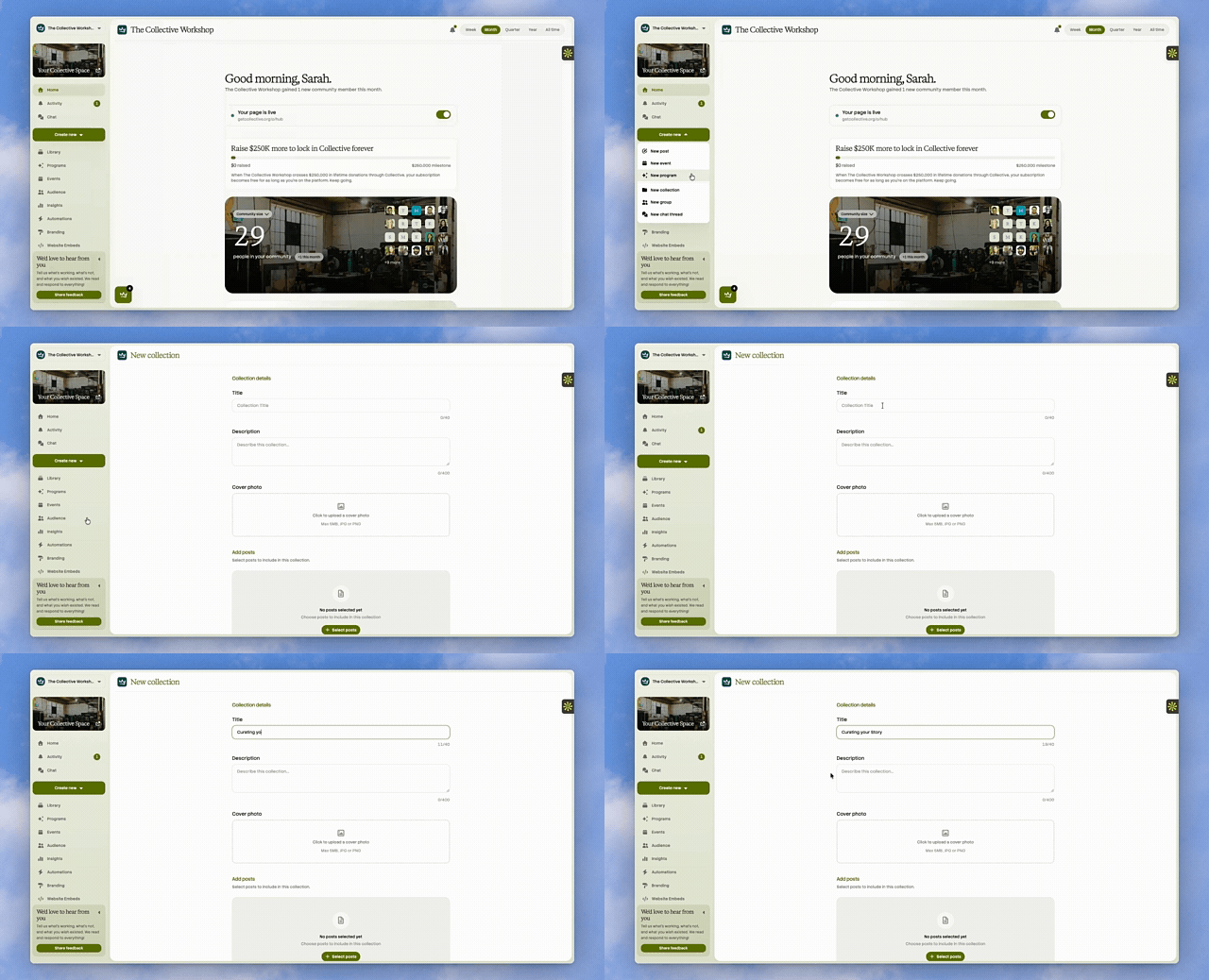 Curating your CollectionsJul 8
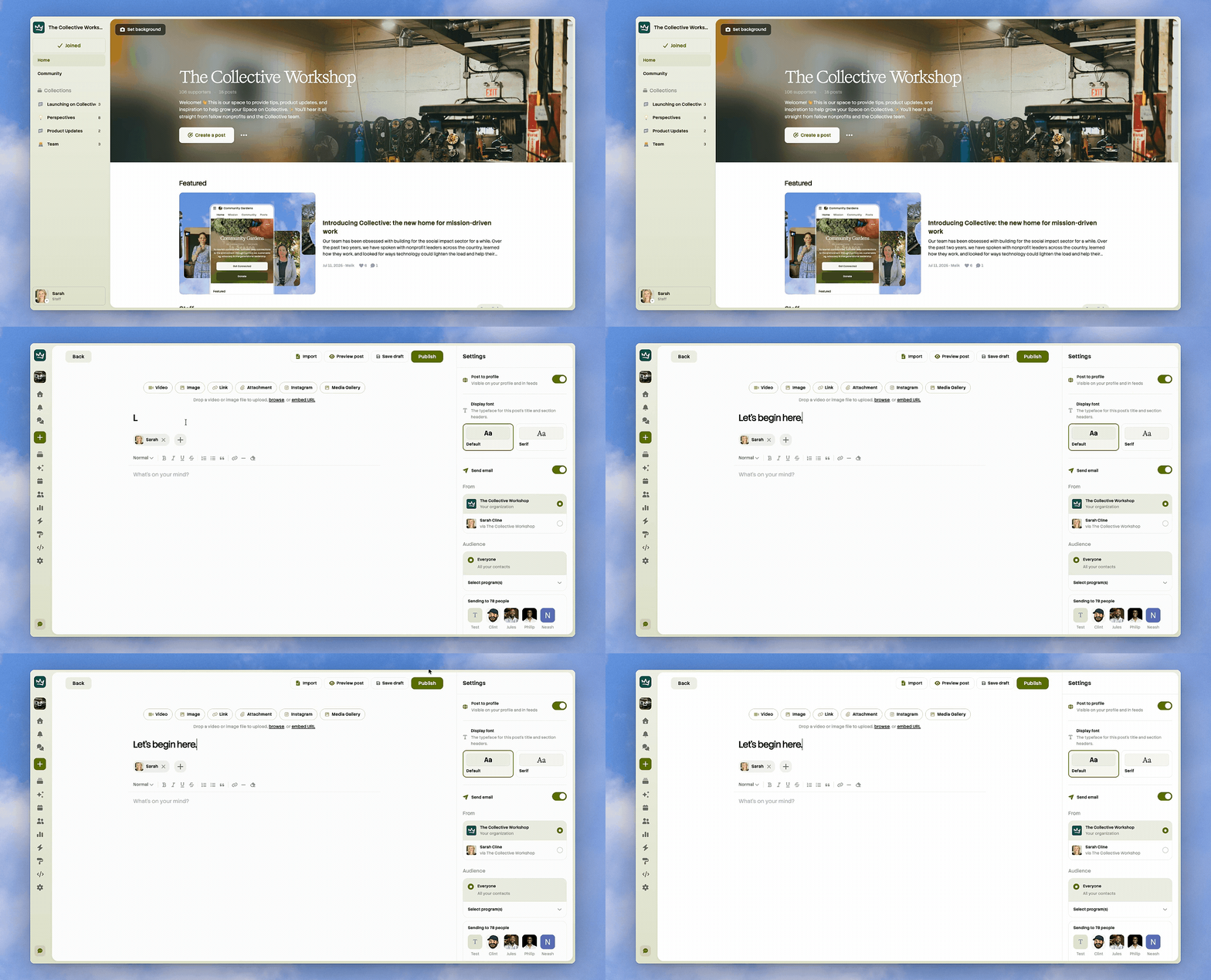 Writing your first PostJul 1
 Your Collective Space, in 10 minutesJun 29