



 The Collective Workshop

3 likes
Unrestricted
Last year, a total stranger answered my Instagram DM asking if she would be willing to sit down with me. At the time, I was trying to speed-learn as much as I could about the various problems facing the nonprofit sector, studying the relationship between digital marketing efforts and fundraising. Looking back, I'm embarrassed at how nervous I was to send this message. For those who haven't met her, Maggie Kane is incredible. She followed her passion and tackled food insecurity in her twenties and opened A Place at the Table Cafe—a pay-what-you-can restaurant that's now a community staple. Anyone who knows Maggie understands why being nervous around her is absurd—she's a joy to be around and makes everyone feel like they belong in every room. Still, back then I was in the dark, feeling like an eighth grader asking LeBron to teach me how to dribble. I wanted to learn one thing from Maggie: how do you do it? From the outside looking in, it seems like A Place at the Table had it all figured out — people love them and their digital presence is top notch. She answered my questions honestly, but it was when I asked “How do you all grow?” the conversation shifted. I expected secret tactics, but instead she told me why the traditional channels only kind of work, but they have to rely on them. Their most effective strategy has always been getting people together, having them feel the impact live, and spreading the word.At the end of our conversation Maggie mentioned that she had helped organize a screening of the hit documentary Uncharitable in Raleigh for the following week. So I went.---The theater was packed. Hundreds of nonprofit leaders from across the Triangle filled every seat. As the film played, I found myself watching the audience as much as the screen. Heads nodded in unison during every painful truth. A collective exhale when the Wounded Warrior Project story unfolded. Agreeing snaps as the film dissected the “overhead” myth.The real impact came after. No one was debating about whether the bold claims that film makes are right— they knew they are spot on because they live it every day. The conversation was rawer than that. Everyone agreed the system was broken. Everyone wanted change.Yet, the energy and animation present when discussing problems noticeably faded when conversation turned to solutions. The good ideas seem daunting: How do you persuade funders to shift their decades-old belief that people shouldn't earn competitive salaries for social impact work? How do you invest in growth when every expense is scrutinized? How can you innovate when there's no margin for failure?I left that screening with unexpected clarity. The real problem isn’t that nonprofits do not know how to grow— they know exactly what to do and what their strengths are. The problem is that they are not free to do it. The sector has become entangled in a web of rules, hacks, and best practices—all born from necessity—that obstruct the social impact sector's greatest strengths: authentic connection, stories, and spaces.That day, it was evident that the impact sector's path to becoming truly unrestricted can't rely solely on advocacy and gentle unlearning decades of precedent—it must be rebuilt. I believe that the strongest future for the nonprofit sector is one where the professional change-makers are able to all make comfortable salaries, retain talent, and grow however they see fit.This all starts with influence, and I think nonprofits need more of it.First PrinciplesAround that time, I started building Collective. My strongest belief is that a less-restricted mission-driven sector is one where each nonprofit has more influence. Let me be clear: I mean influence in all forms — influence with their existing donor base, influence in their local communities, influence among the populations they serve through action.Influence is harder than ever to come by these days. We are living through one of the most serious threats to the public perception of nonprofit work that many of us have seen in our lifetimes. Congressional and federal probes are increasingly targeting nonprofits, especially those that are working to improve our society’s acceptance of diversity programs. Reputational risks are ever-present and forcing nonprofits to sanitize their messages in order to stay alive, otherwise real threats to tax-exempt status are looming. Social media platforms are actively suppressing content from nonprofit organizations, decreasing their reach to their existing followers and making any organic traffic next to impossible.Collective is being built as a direct response to the era that we are living in. Nonprofits cannot build sustainable followings and grow their influence if their connection to their audience depends on unreliable platforms that frequently change their algorithms to decide who sees what based on what is best for their business.We believe that nonprofits need more thriving spaces that they own. The most compelling path forward is for actual humans, loving the work of one organization, to share it with other humans—by email, word of mouth, sharing links, telling your story for you. That is the foundation that the entire sector is built on, but genuine human-to-human spaces are becoming increasingly crowded out.It doesn’t have to be that way. The blueprint is sitting right in front of us.For the past year, we have been building free tools for mission-driven organizations to grow their audience and influence by repurposing their existing content that they have already worked hard to create into digital spaces that they own and can use to grow sustainably, unrestricted by the opaque laws of social media. We believe that nonprofits should be able to control their destiny and own their influence, but those pathways must be built. We think that what you already have is enough to build your influence: you have incredibly passionate people, stories to tell, and audiences to better engage. It is our job to get you there, quickly.Thank you for your trust and continued support as we continue to build towards our mission of returning power to the nonprofit sector. The giving experience on Collective (Part 1: Checkout)Jun 23
 Nonprofits should care about the creator economyJun 172 likes
 Donors Want to Join Your Mission, Not Just Fund ItSep 8, 2025
 Fans Cheer for Teams. Donors Do Too.Jul 17, 20254 likes
 UndervaluedJul 16, 20254 likes
 The Engagement Mirage: When Likes Don’t Transfer to DonationsJul 11, 20251 likes
 Introducing Collective: the new home for mission-driven workJul 11, 20256 likes
 Why Sarah is Building CollectiveJul 16, 20254 likes
 Why Daniel is building CollectiveJul 16, 20252 likes
 Why Malik is building CollectiveJul 14, 20252 likes
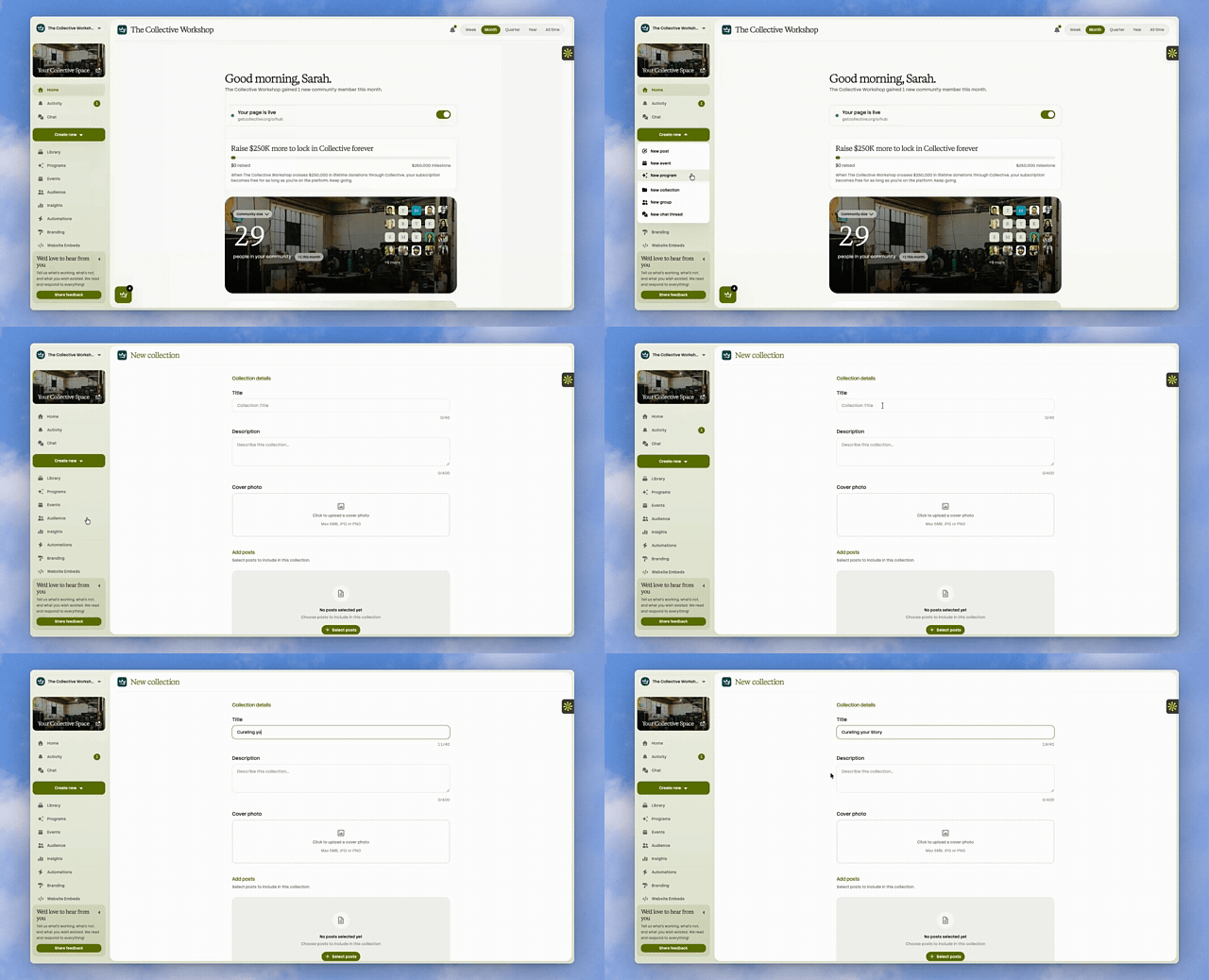 Curating your CollectionsJul 8
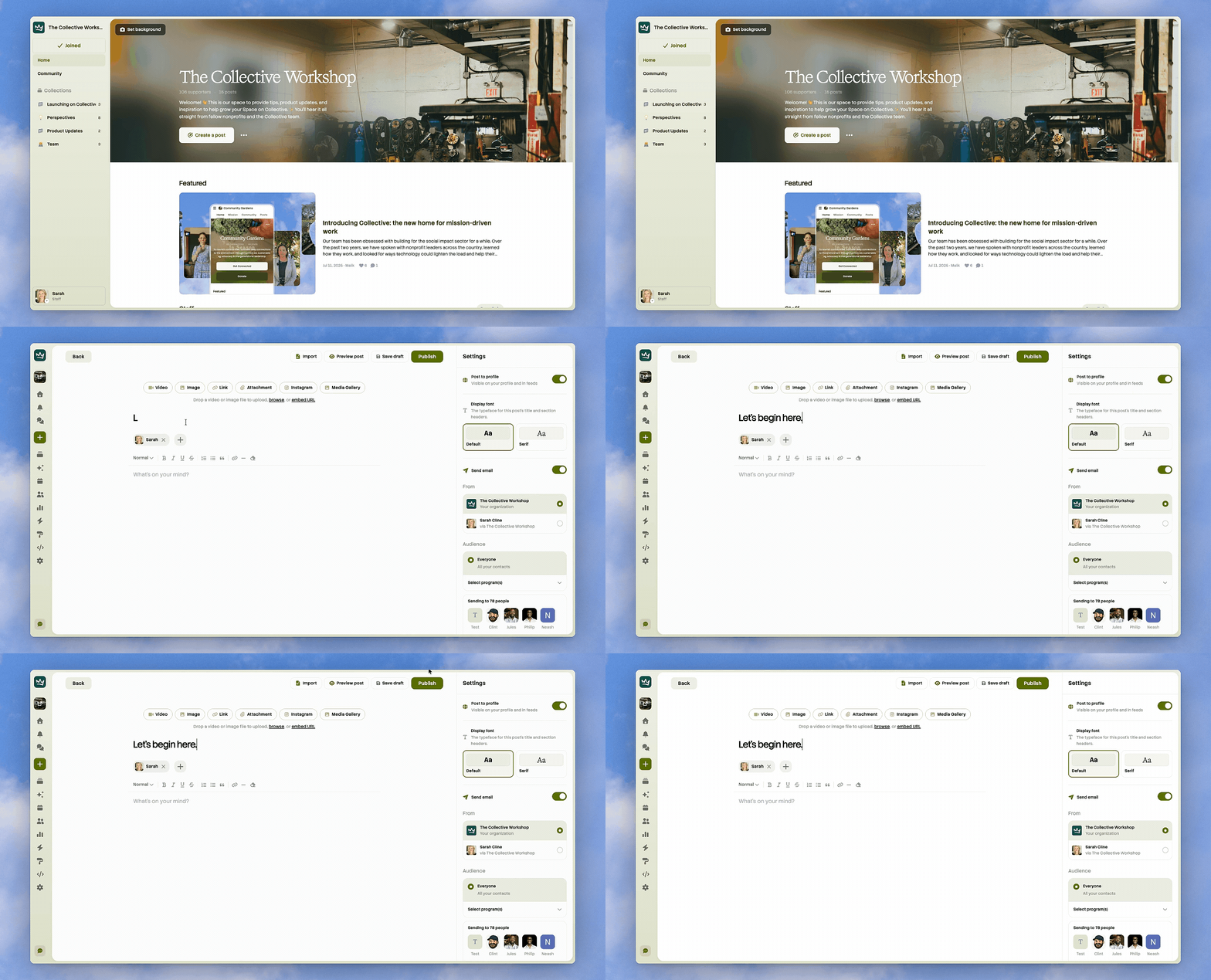 Writing your first PostJul 1
 Your Collective Space, in 10 minutesJun 29
 Your first ProgramJun 26
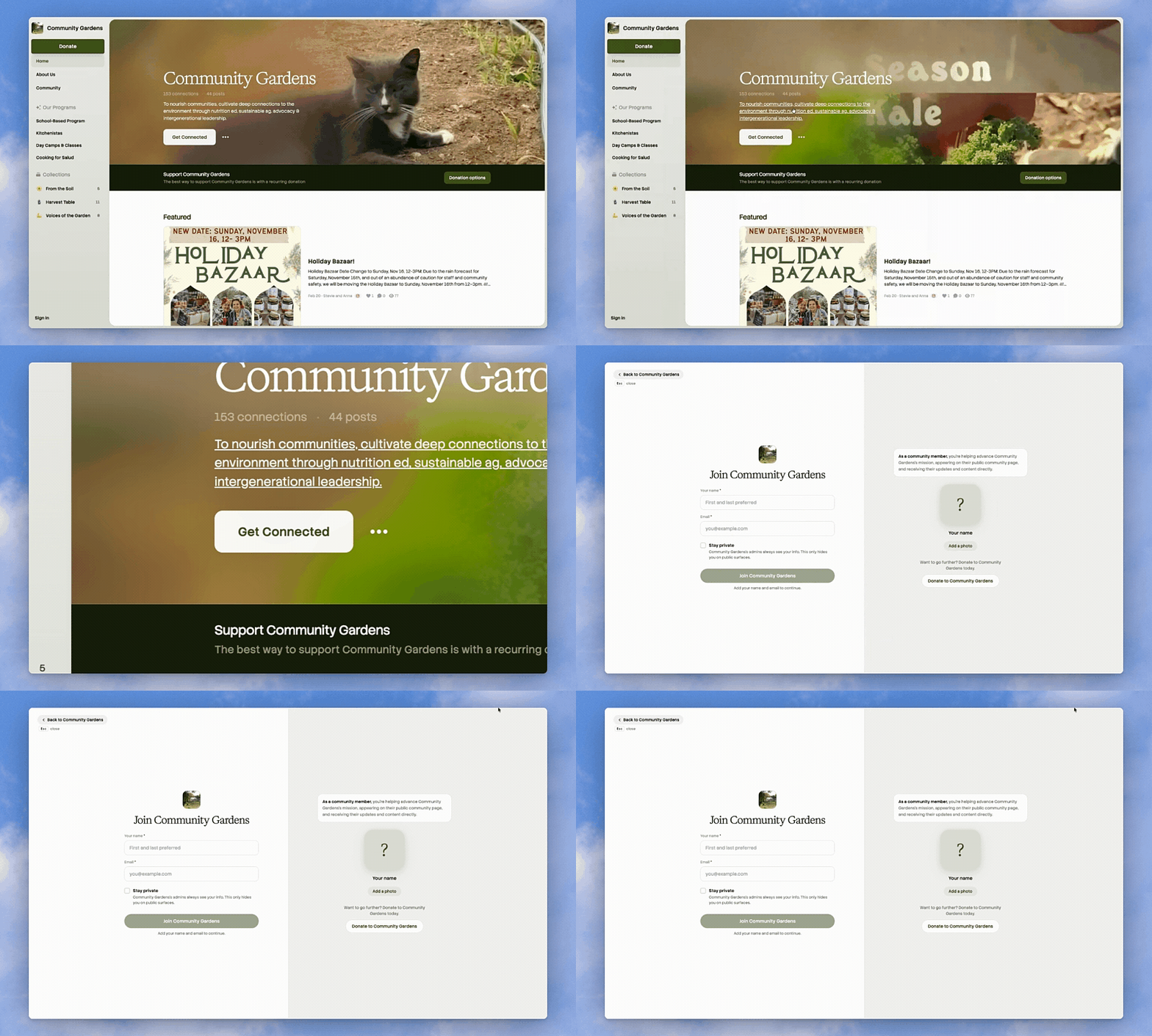 How we designed the Collective SpaceJun 17