



 The Collective Workshop

6 likes
Introducing Collective: the new home for mission-driven work
Our team has been obsessed with building for the social impact sector for a while. Over the past two years, we have spoken with nonprofit leaders across the country, learned how they work, and looked for ways technology could lighten the load and help their work grow more naturally. We learned that every nonprofit is quietly forced to treat relationship-building and retention as separate from storytelling and marketing. We think this is an existential threat to mission-driven work everywhere. The audience an organization has earned—donors, volunteers, board members—largely lives in some database built to log a gift and little else. Meanwhile, the media and stories they produce mainly live on platforms they cannot control. Neither space was designed to reflect what nonprofits are best at offline: moving the right supporters through storytelling and helping them find each other. Collective puts the two in the same room. It is one space, owned by your organization, where the people you already know meet the stories you are already telling. The result is a simpler, more active representation of the organization as a whole that grows. Because the goal is to save effort rather than create it, Collective stays current by syncing with the channels you already use, so nobody has to maintain it by hand. We start by bringing in your existing work — your mission from your website, your content from Instagram, your staff — so you begin with something real rather than a blank page. A line of your own Reaching your own supporters today feels like placing a phone call a hundred years ago: a small miracle at first, and never quite in your hands. Back then, you couldn’t place a call directly. You gave an operator a name and waited while they found the right cord and plugged it into the board. It went through only if they actually put it through. Social media works the same way. Posting is free, and the whole audience seems to be right there, which feels like magic. But every message still runs through an operator of sorts — an algorithm that decides which of your own followers it bothers to reach. The result is that 96% of a nonprofit’s followers never see the average post because every post has to compete with the rest of the world for that person’s attention, and are buried by companies who can buy that same person’s attention. We believe that most nonprofits have started to do the work of small media companies and large influencers, while the part that matters most — reaching its people — runs through a switchboard it doesn't own. We kept asking what it would take to reach the people who already raised their hand, on its own terms. That's why Collective exists. It's the dial, not the operator. Built around the people you already have Until now, keeping a supporter has mostly meant asking them to give again. With Collective, keeping a supporter means giving them a place to belong. The reason is plain. Roughly eight in ten first-time donors never give a second time — not because they stopped caring, but because nothing kept them close. After the first gift, the only word most of them hear is the next ask. So Collective begins with the people a nonprofit has already earned, not the strangers it hasn't met. They are the likeliest to stay, and the easiest to reach once there's a direct line. What they find when they arrive is a place that feels alive: the work carrying on between campaigns, the faces behind it familiar, and other supporters plainly there alongside them. That is what turns a list of donors into something closer to a community. Belonging does what reminder emails never could. People who feel part of something tend to stay part of it, and giving again becomes something natural rather than a favor someone asks of them. Your tools shape your mission Every tool a nonprofit uses carries a quiet idea about what supporters are for. A database built to log gifts treats people as transactions. A platform built to sell attention treats them as an audience to rent. Use those tools long enough, and relationships can start to look that way too — a pipeline to fill, not people to know. It shows up in small ways. A supporter hears nothing for months, then opens an email that begins "We miss you," three days before the year-end deadline. The tool noticed a lapsed gift, not a person — and the supporter can tell. We built Collective on the opposite belief: people who give to a cause are part of it, and they deserve a tool designed to keep them close, not to chase them down. Our hope is that supporting a cause comes to feel less like writing a check and more like belonging to something that lasts. This launch is our first step toward that, with many more to come. The giving experience on Collective (Part 1: Checkout)Jun 23
 Nonprofits should care about the creator economyJun 172 likes
 Donors Want to Join Your Mission, Not Just Fund ItSep 8, 2025
 Fans Cheer for Teams. Donors Do Too.Jul 17, 20254 likes
 UndervaluedJul 16, 20254 likes
 UnrestrictedJul 15, 20253 likes
 The Engagement Mirage: When Likes Don’t Transfer to DonationsJul 11, 20251 likes
 Why Sarah is Building CollectiveJul 16, 20254 likes
 Why Daniel is building CollectiveJul 16, 20252 likes
 Why Malik is building CollectiveJul 14, 20252 likes
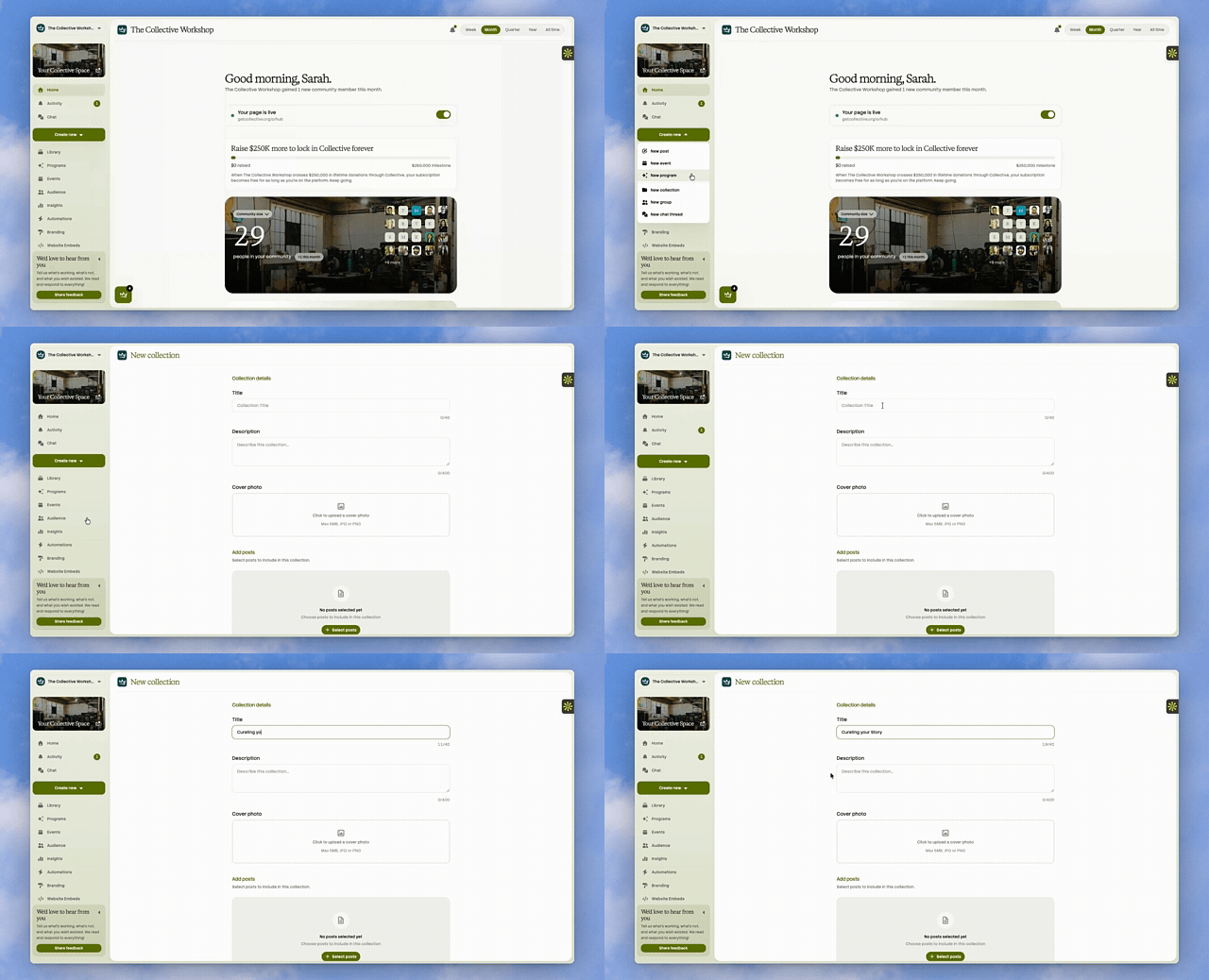 Curating your CollectionsJul 8
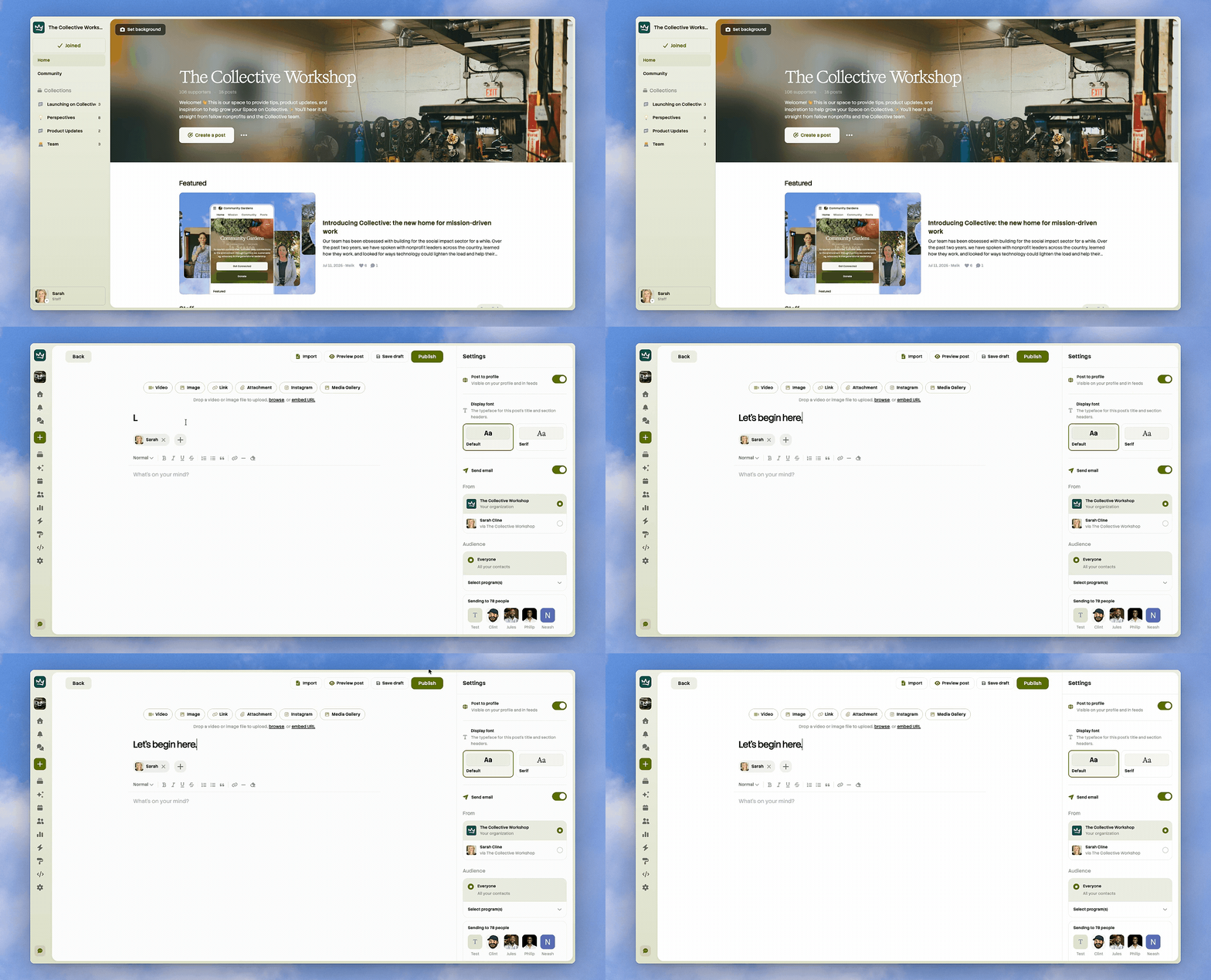 Writing your first PostJul 1
 Your Collective Space, in 10 minutesJun 29
 Your first ProgramJun 26
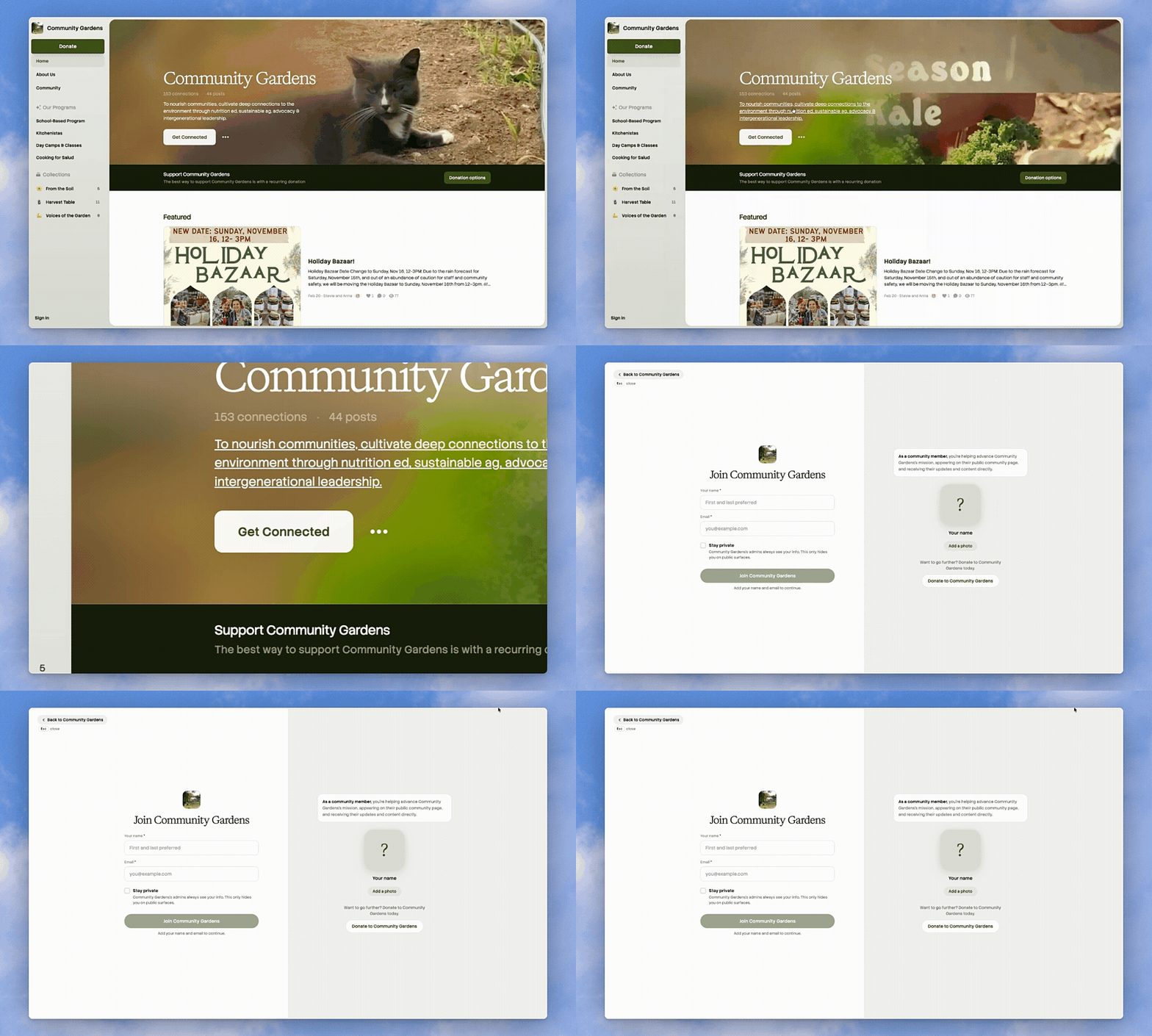 How we designed the Collective SpaceJun 17