

 ACLU of Georgia
Protect our Privacy: Pass Community Control over Police Surveillance in Atlanta
Protect Our Privacy: Community Control Over Police Surveillance in Atlanta calls for increased transparency, oversight, and accountability around law enforcement’s purchase and use of surveillance technologies.
Atlanta residents and communities affected by police surveillance
From acluga.org/campaigns-initiatives/popatl ↗About this program
Protect Our Privacy: Community Control Over Police Surveillance in Atlanta calls for increased transparency, oversight, and accountability around law enforcement's purchase and use of surveillance technologies.
Atlanta is the most-surveilled city in the U.S. and one of the most surveilled cities in the world. Various surveillance technologies constantly collect vast amounts of information about where we go, who we see, and what we do, even though the majority of us have done nothing wrong.
Once collected, data captured by surveillance technologies often spreads far beyond its original source and purpose. Without strong safeguards, data can be discreetly shared with other jurisdictions or federal agencies like ICE without public knowledge or consent, where it can be used to target protestors, immigrants, LGBTQ+ people, people seeking reproductive care, and other vulnerable communities. These risks aren't hypothetical.
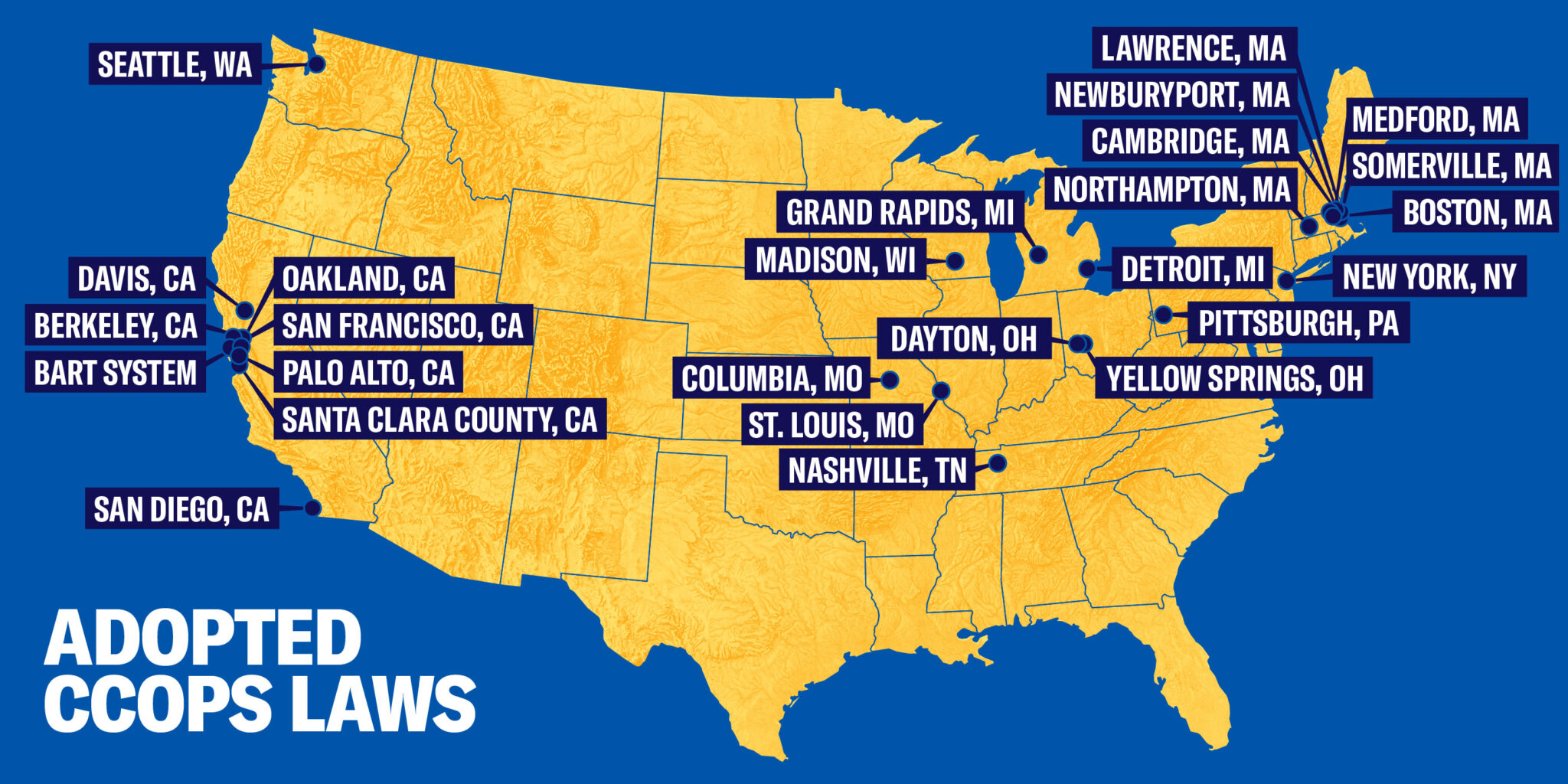
That's why the ACLU of Georgia is advocating for a "Community Control Over Police Surveillance" (CCOPS) ordinance in Atlanta, which would follow the national gold standard giving residents and local elected officials a say in whether, and how, surveillance tech is used in their communities. These ordinances have already been adopted in 26 cities across the country, where they serve to protect and empower nearly 18 million people.
It requires any new contract or donation relating to surveillance technology of more than $20,000 to be submitted to City Council for approval. Before voting on the contract or donation, several steps must be completed, including: Submission of a Surveillance Impact Report and Surveillance Use Policy, which provide detailed information about the proposed tech and how it would be used; Public release of those documents, so community members and groups can develop informed opinions and mobilize; A public hearing with public testimony before City Council, so our elected officials can hear their communities' views; and Review and recommendation by a well-informed City Council committee. If City Council approves the surveillance technology, the agency may only use it for its approved purposes outlined in the Surveillance Impact Report and Surveillance Use Policy. Each year, agencies must submit an Annual Surveillance Report and hold community engagement meetings to discuss the report and answer questions from residents.
Questions
Does this ordinance ban surveillance technology?
No. It does not block city contracts or prevent the city from using surveillance technology. Instead, it creates a process for the city council to thoughtfully consider surveillance technology contracts or donations through a transparent process that prioritizes public input. In short, it provides council members with the information they need to make well-informed decisions.
What is a Surveillance Impact Report?
A Surveillance Impact Report explains the basics of a surveillance technology device, how it works, why it is being proposed, where it will be used, and what it will cost. This report should be submitted by the agency seeking to use the proposed surveillance technology before a contract is approved.
What is a Surveillance Use Policy?
A Surveillance Use Policy establishes the rules governing how a surveillance technology device may be used. It addresses issues such as authorized uses, data collection, data retention, data sharing, auditing, oversight, and how members of the public can submit complaints. This report should be submitted by the agency seeking to use the proposed surveillance technology before a contract is approved.
What information would be included in the annual surveillance reports?
Annual surveillance reports summarize how each surveillance technology device was used in the previous year, including any data sharing, complaints, audits, policy violations, and costs. They help ensure transparency and accountability after a technology has been approved and deployed. These reports should be submitted every year by agencies that have been approved for the use of surveillance technology.
How does this ordinance protect against ICE and other agencies accessing our data?
Even if city agencies do not directly authorize data sharing with other entities, the entities may indirectly receive the data through cloud-like databases. This ordinance requires agencies to identify which other government entities may receive access to surveillance data and what information will be shared on the cloud. It also encourages agencies that are seeking council funding or donation approval to establish safeguards to ensure that entities receiving surveillance data comply with applicable restrictions and do not share data with unauthorized persons or agencies. In addition, it requires agencies to specify the legal standard that must be met before another government agency or third party can obtain access to surveillance data, such as requiring a warrant or court order.
Details
- Who
- Atlanta residents and communities affected by police surveillance
- Where
- Atlanta
Run by
ACLU of Georgia's Local Election Advocates and Defenders (LEAD)The Local Election Advocates and Defenders (LEAD) program helps build more transparent, effective, accessible, and responsive elections offices. The CROWN ActThe CROWN Act was created to ensure protection against discrimination based on race-based hairstyles by extending statutory protection to hair texture and protective styles such as braids, locs, twists, and knots in the workplace and public schools.Stop. The. Bans.The ACLU of Georgia’s work to fight for reproductive freedom.