
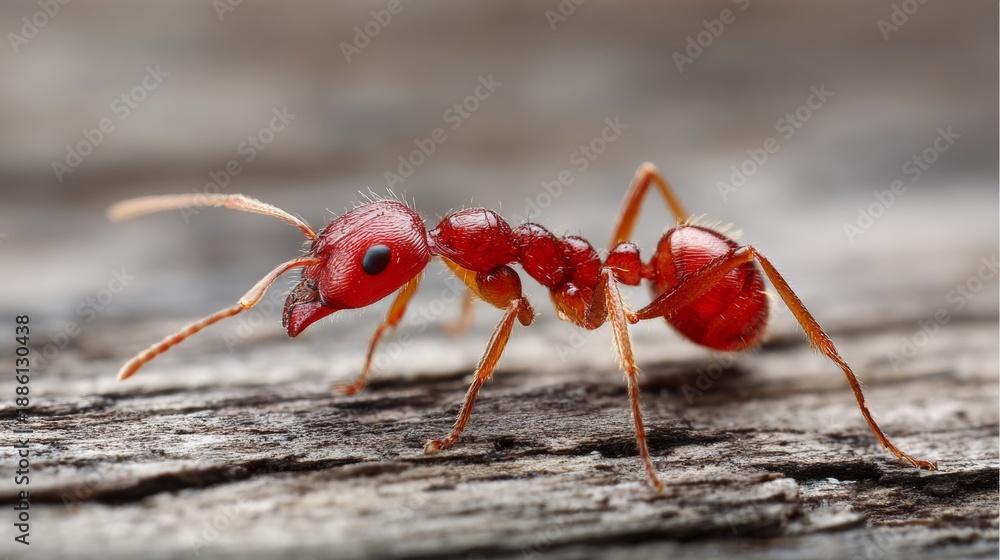

Fire ants inflict painful stings and create unsightly mounds in our landscapes, so most of us would be happier if there were no fire ants around. You should be aware, however, that fire ants are excellent predators and help control such pests as fleas and ticks in lawns.
Although eradicating fire ants in Georgia is about as likely as doing away with mosquitoes or cockroaches, with persistence and the correct application of insecticides, you can control these pests. Just keep in mind there is no treatment that eradicates fire ants from a yard permanently.
You can use a variety of products and methods to control fire ants effectively. Choose the right product for your garden based on your situation and preferences.
When using a pesticide, always read the label carefully before you purchase it. Make sure you understand and are comfortable with how to use it and that it is appropriate for your situation.
Here are details on some of the various options available for controlling fire ants:
Baits
Fire ant baits consist of an insecticide combined with a food material that fire ants will consume. The bait is brought back to the colony and fed to other ants, including the queen.
You can apply baits to individual mounds or, better yet, broadcast them over an entire yard. Even more effective than treating one yard, research shows that if neighbors get together and treat an entire neighborhood, the results are even better.
Use fresh bait and apply it when the ground and grass are dry and no rain is expected for the next 24 hours. Apply baits when the worker ants are actively searching for food. There are several baits in stores that contain a variety of active ingredients.
Dusts
Some products, such as those containing acephate, are applied as a dry dust. Ants walking through the treated soil get the dust on their bodies and transport the insecticide into the mound. Within a few days, the entire colony should be killed. To use a dust, distribute the recommended amount evenly over the undisturbed mound.
Mound Drenches
Other insecticides that control fire ants are mixed with water and then applied to the mound as a drench. These liquid mound drenches kill the ants underground but you must apply them in sufficient volume to penetrate the entire nest. Generally, pour about 1 gallon of diluted mixture gently over the top of each mound. These drenches usually eliminate mounds within a day.
Granules
Granular products offer another method of getting insecticide into fire ant mounds. To treat a single mound, measure the recommended amount and sprinkle it on top of and around the mound. Do not disturb the mound.
If the label specifies watering in the granules, using a watering can, gently pour 1-2 gallons of water over the treated mound to wash the granules into the soil. Unless the product completely penetrates the mound, ants will move to a different site through their underground foraging tunnels to avoid the insecticide.
Another option is to use an Insect Growth Regulator (IGR). One such option is a material sold under the trade name Extinguish. Extinguish does not kill the fire ants directly. It is a granular product that you broadcast throughout the yard. Worker ants forage and bring it back to the mound. When the queen feeds on it, it sterilizes her. As a result, any new eggs she lays will be inviable, and as the fire ants die of “old age” there are no new fire ants to replace them.
Organic Controls
A few active ingredients used in fire ant control products such as boric acid, pyrethrin, rotenone, citrus oil extract, and diatomaceous earth are acceptable to organic gardeners.
Diatomaceous earth, a natural silica-based dust, kills some ants, but it rarely eliminates ant colonies when used alone. Also, be careful to avoid breathing in the dust-like particles.
Pouring 2-3 gallons of very hot (almost boiling) water into the hill will eliminate about 60 percent of the mounds you treat, but you must use this treatment very carefully, or you risk being severely burned. Very hot water also kills any grass and plants it contacts, however, and you will need to treat surviving mounds again.
Some Things Don’t Work!
There also are some home remedies that simply don’t work well at all.
For example, spreading grits on a fire ant mound will only feed them or make them move. Placing orange or grapefruit peels on a fire ant mound will only make them move to another spot. Shoveling one mound on top of another in an attempt to force the ants to kill each other also is not effective.
If you want more information on eliminating fire ants, contact your Cobb County Master Gardener Volunteer at the Extension Office at 770-528-4070.