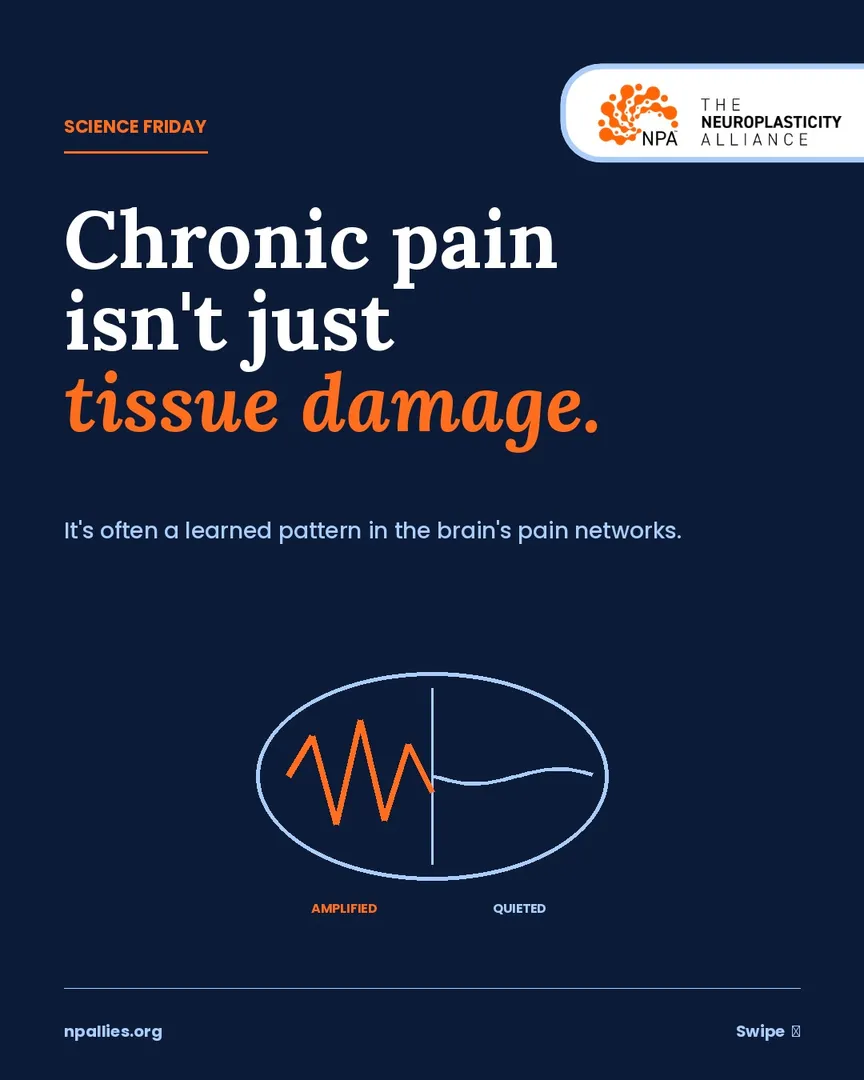


Promising therapy spotlight: Pain Reprocessing Therapy (PRT) — a neuroplasticity-based approach for chronic pain. Chronic pain was long thought to be a message from damaged tissue. Current neuroscience has reshaped that picture. Research summarized across BrainFacts.org (the Society for Neuroscience's public outreach) and the Dana Foundation shows that in chronic pain, the brain's pain-processing networks become sensitized — the signal gets louder even when the original injury has healed. Pain Reprocessing Therapy, developed by Alan Gordon and studied by Dr. Yoni Ashar and colleagues, applies neuroplasticity principles directly to that mechanism. In the 2021 Boulder Back Pain Study (JAMA Psychiatry, Ashar et al.), 66% of patients with chronic back pain were pain-free or nearly pain-free after four weeks of PRT, compared to 20% in the placebo group. Benefits were sustained at the one-year follow-up. PRT is a clear example of what NPA tracks: evidence-informed approaches that apply neuroplasticity to real conditions, designed to work alongside standard medical care. It's not a replacement for your care team's judgment — it's a tool worth asking about. You can learn more about PRT and other evidence-informed approaches in the NPA Treatment Directory. https://app.npallies.org 🔖 Save this. Share with anyone navigating chronic pain. #ScienceFriday #PRT #ChronicPain #Neuroplasticity