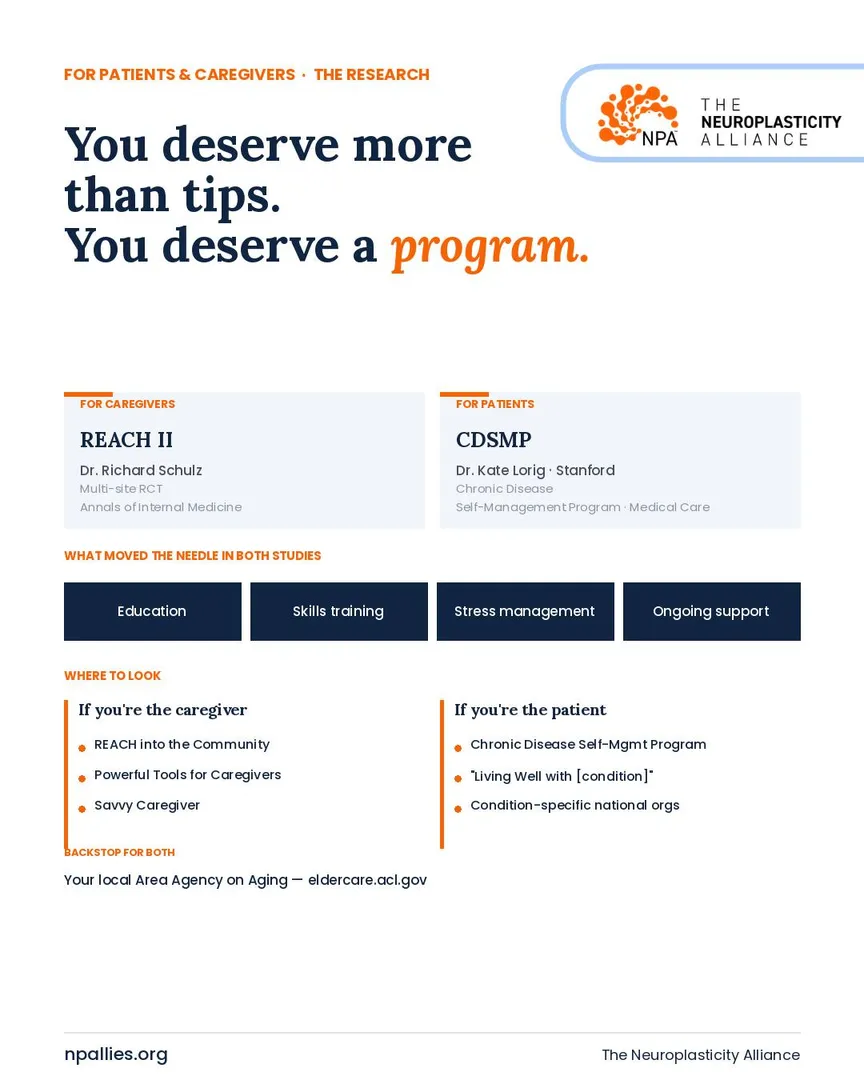

You deserve more than tips. You deserve a program. Whether you’re the patient or the caregiver, the research points to the same answer: scattered tips don’t change outcomes. Structured, multi-component programs do. For caregivers — Dr. Richard Schulz’s REACH II trial (Resources for Enhancing Alzheimer’s Caregiver Health), published in the Annals of Internal Medicine, tested a four-part program across six U.S. cities: education, skills training, stress management, and ongoing phone-based support. Caregivers in the intervention arm showed significantly reduced depression, reduced burden, and improved quality of life. For patients — Dr. Kate Lorig’s Chronic Disease Self-Management Program (CDSMP), developed at Stanford and published in Medical Care, tested the same four-part structure for people living with chronic conditions. Participants showed improved self-management, better communication with their care team, and fewer unplanned health care visits. Same four components. Two different audiences. Same pattern in the data. Information alone wasn’t enough. A support group alone wasn’t enough. The combination moved the needle — in both studies. Where to start looking: If you’re the caregiver: REACH into the Community (the Rosalynn Carter Institute’s public translation of REACH II), Powerful Tools for Caregivers, or Savvy Caregiver. If you’re the patient: The Chronic Disease Self-Management Program or a “Living Well with [your condition]” program through your condition’s national organization. Backstop for both: your local Area Agency on Aging (eldercare.acl.gov) often hosts sessions near you. You deserve more than tips. The research says so. 🔖 Save this for yourself — or someone who’s running on fumes. #PatientAdvocacy #CaregiverSupport I #CDSMP #Schulz