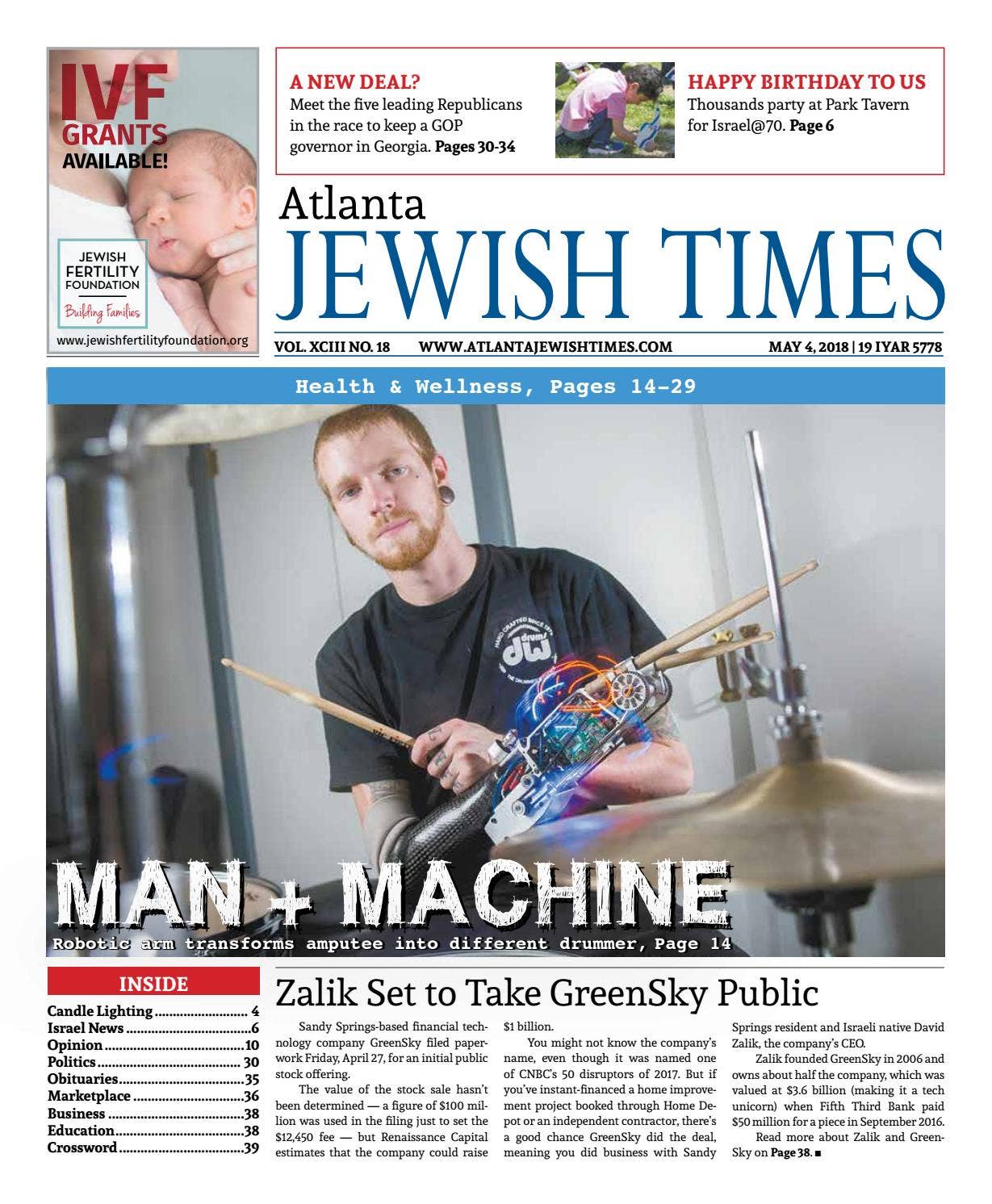

How an offhand comment in a pool led Elana Frank to found the Jewish Fertility Foundation, and change how families afford to grow theirs
This week, I sat down with Elana Frank, the CEO and founder of the Jewish Fertility Foundation, to learn about how her own fertility journey led her to a career supporting others trying to build their families.
We discussed the kind of support the foundation offers (emotional and financial), the new Houston chapter, and her words of wisdom for anyone just starting out on their own path to parenthood.
The piece is lightly edited for clarity and length, but these are her words.
Stacy: Tell me about your background and why you started JFF
Elana: Like you, I came to this with my own pain. My husband and I got married and moved to Israel. We wanted four kids, maybe adopt some more. It wasn’t even a real conversation, looking back. He was already in his 30s, I was 29, and it wasn’t working.
I went to a doctor after only a few months. In Israel, they don’t ask how long you’ve been trying to conceive, they ask how long you’ve been married. So they never actually checked my body. They gave me Clomid. Then we found a doctor who did IUI treatments out of his basement at night, cash on the table. We did that for months and months.
Eventually we got a second opinion, and the first thing they did was check my body. My tubes were blocked. All that time, none of it was ever going to work. The doctor was upset. He said if I had gotten pregnant, it could have been an ectopic pregnancy. But I was in a country that values family building, so he told me I was eligible for IVF, and it was free.
I got pregnant the first cycle. My problem was never my eggs or my husband’s sperm. It was my tubes. I have a son who’s turning 15 this month from that, and a 13-year-old from a second round. Both boys.
11 years ago, after we moved back to the US, I was at the JCC in Atlanta sitting by the baby pool with some women I knew. We started talking about fertility treatments, the losses, the ups and downs, and then the expense. One of them said something about her “$60,000 twins.” I didn’t even understand what she meant at first.
I went home and looked into what existed in the Jewish community around fertility. We’re so good about day school, summer camp, and there was nothing for health. The Orthodox community had some infrastructure. Mainstream Jewish community, nothing. So 11 years ago, I started Jewish Fertility Foundation.
Stacy: I know JFF offers a lot of different kinds of support beyond financial grants. Can you walk me through what that looks like?
Elana: People often assume folks come to us first for money. That’s a good guess, but people equally come to us for emotional support and education.
On the financial side, we offer three grants. An IUI grant, which isn’t needs-based, it’s really just a hug from the Jewish community saying we’re sorry you’re going through this. And up to $10,000 for IVF, which is heavily needs-based. We’re looking at your finances and your medical likelihood of success, because we want our donor dollars going to people who are likely to succeed.
Those grants are matched with a 20% discount through our network, we have about 56 national fertility clinic partners across the 12 states we’re in. We also try to connect people with local interest-free loans, sometimes up to $25,000, because even with a $10,000 grant and a 20% discount off a $20,000 IVF cycle, there’s still more cost coming.
Emotional support and education are open to anyone, regardless of faith. We do national virtual support groups, local in-person groups where we have a presence, and our Fertility Buddies program, which is peer to peer. Someone who’s been through a specific experience, pregnancy loss, surrogacy, adoption, LGBTQ+ family building, gets matched with someone currently going through it. We also send care packages after bad news. It’s not going to fix everything, but it’s a reminder you’re not alone.
On education, we train clergy and Jewish communal professionals so they understand the resources available to their community. We go into fertility clinics and train them on the specific needs of observant Jewish patients. And we do a lot of work with intended grandparents, because parents want to help and often don’t know what to say.
Stacy: What does it actually mean for a family when JFF says yes to a grant?
Elana: In many cases, they’re not putting $20,000 on a credit card. They might have already tapped out family and friends. We’re not working with people who have $20 in the bank, we’re working with average two-income households who have the potential to make money in the future but weren’t expecting this cost right now.
And it’s never just $20,000. It takes about two to three IVF cycles on average to equal a baby. That’s closer to $60,000, not even including medication. So we step in at a point where otherwise they might not have the option to move forward. And then we give them wraparound support, the education and mental health piece too, not just for the woman, but for her partner going through it with her.
Stacy: You just launched a new chapter in Houston. What’s the story behind that?
Elana: Every story is a little different, but always the same shape. Someone reaches out and says, I went through infertility, why aren’t you in Houston. And I say, we can be.
We work with what we call an exploratory committee chair, someone local who becomes the cheerleader on the ground. We look at the size of the Jewish community, how many fertility clinics exist, what the local federation system looks like, to understand the actual need. About one in five people of baby-making age will need assistive reproductive technology at some point.
From there we calculate what it would cost to sustain two years of operations, and the local team raises that capital. In Houston, they raised it through family foundations and individual donors. We’re doing the same process in California right now too. Sometimes it moves fast, sometimes slow, it really depends on the bandwidth of the volunteers on the ground.
Stacy: If a woman is just starting to suspect she might be dealing with infertility, what’s the first thing you’d want her to know or do?
Elana: Don’t wait. Advocate for yourself. In America there’s this idea that you need a year of trying before you’re considered infertile. Don’t wait. Go to your doctor, demand tests. If you’re a 23-year-old and a doctor tells you you’re young and have time, don’t accept that. Demand the testing.
And if you have a male partner, get a sperm test first. It’s easy, and men are 50% of the equation. Everything is information. Don’t be afraid of what you’ll find out. It’s just information that helps you make decisions.
Stacy: What’s a misconception about infertility, medical or emotional, that you wish more people understood?
Elana: I go back to embryo donation. I have a child who isn’t biologically related to me. I think it takes a lot for someone to come to terms with needing an egg or sperm donor, there’s a real mourning period for a lot of people. I have two biological children through IVF, and I have this amazing human who isn’t biologically related to me.
I wish I had known years earlier the capacity of love I’d have for a child who might not look exactly like me. I don’t ever want to tell someone to just get over it, because I understand the grief. But I wish I could hand people that feeling in advance, because otherwise it feels like time wasted.
Stacy: For someone who feels guilt or shame about needing financial or emotional support, what would you say?
Elana: Don’t feel ashamed. This is a real, unanticipated expense. Whether you’re young and just starting out or you’ve been married a while with a mortgage and cars, nobody plans for this cost. It adds up fast, that’s exactly why we work so hard to raise money.
Even if you don’t think you’re eligible, ask. Not everyone gets the same amount, there’s a whole rubric based on what we have and your financial picture at the time, but you never know until you ask.
If you're navigating infertility, or know someone who is, the Jewish Fertility Foundation offers grants, emotional support, and educational resources across 11 communities nationwide, including their newest chapter in Houston. You can learn more or get involved at jewishfertilityfoundation.org.
Become a paid subscriber
Buy me matcha
Women’s health shouldn’t feel this isolating. Share this with someone who needs it.