

 Educopia
Research
Our thriving Research program advances understanding of specific challenges in knowledge production, sharing, and preservation at the field level.
From educopia.org/research ↗About this program
Educopia’s Research program is critically curious about how organizations and collaborative communities are shaping and responding to broad social and field-level trends that affect knowledge production and information management.
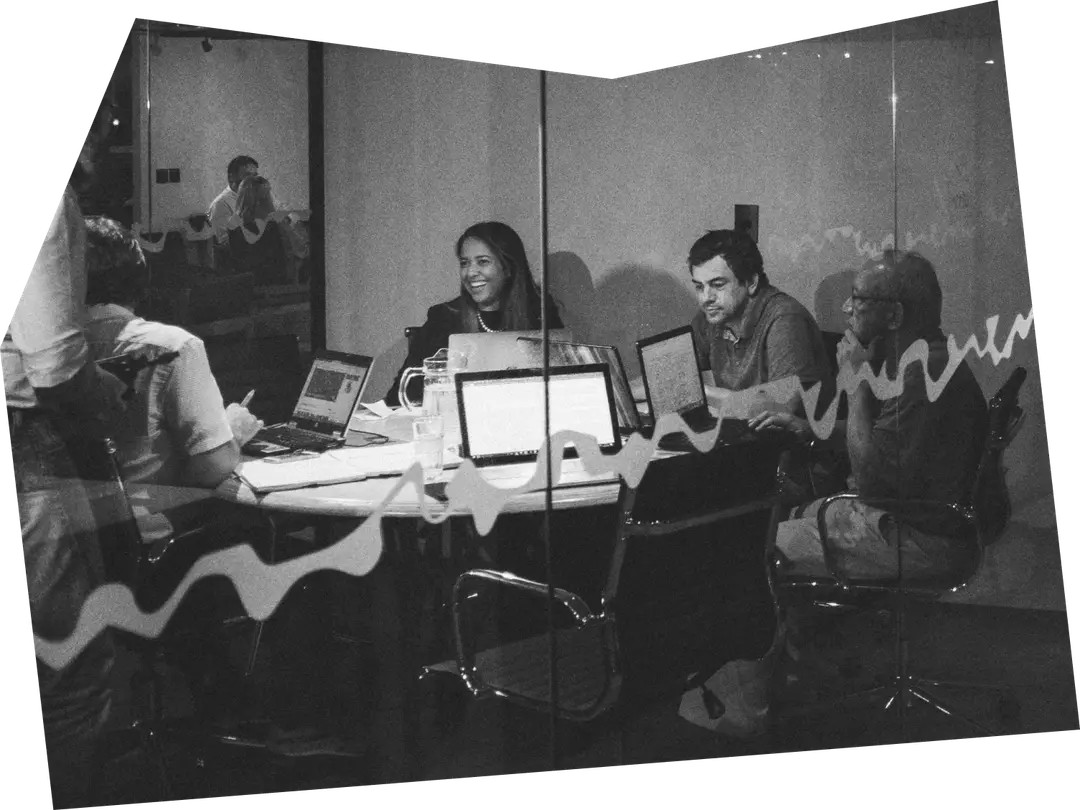
Our Research projects are typically designed with participation from people and groups representing a range of stakeholder perspectives, bringing “the system into the room.”
Educopia partners with existing and emerging organizations and communities within the knowledge ecosystem to identify research questions aimed at exploring, describing, explaining, understanding, or predicting activities and trends. This type of research often clarifies the needs of diverse practitioners within the field, leading to applied research with cross-professional and inter-institutional partners to assess, evaluate, and ultimately increase the impact of their work.
Our research centers collective action, field-level capacity strengthening, and knowledge equity with a focus on: Knowledge Production, Knowledge Sharing, Knowledge Preservation.
Questions
What methods and frameworks does the Research program use?
Research Frameworks: Community based action research; Participatory Action Research (PAR). Outputs: Toolkits and trainings; Webinars and community forums; White papers; Best practices and recommendations; Pilot workflows and products. Data Collection: Semi-structured interviews; Workplace observation; Ethnographic methods; Workflow analysis; Narrative-storytelling; Focus groups; Survey design; Usability testing. Analysis: Close reading of technologies; Trace analysis; Quantitative Analysis; Social Network Analysis; Qualitative coding; Workflow analysis.
What kinds of research questions does the program ask?
How do we design organizational governance models and relational infrastructures that ensure that groups most impacted by the work are actively visioning and co-designing strategy, including during periods of change and transition? How do knowledge communities that were funded, founded, and normed in the U.S. and other areas of the Global North meaningfully and equitably redistribute leadership and resources internationally? What are the existing and emerging models for collaborative knowledge production? How do the models of collaborative knowledge production that we employ create or undermine knowledge equity? How do we facilitate and structure collaborations between organizations to best ensure that what is documented and preserved is representative of the diversity of human experience?
 ConsultingFrom the formation stage to times of change, we tailor our research, training, facilitation, tools, and other Consulting services to meet our clients’ needs.
 Fiscal SponsorshipEducopia's fiscal hosting fee for new projects joining after June 2026 is 15% of revenue for Model A projects, and 10% of revenue for Model C projects. We are currently accepting projects with $150K or more in annual revenueWe provide mission-aligned groups with the administrative, legal, and financial services needed to advance their vision, as well as consulting and peer learning opportunities to build their capabilities.Systems Leadership SeriesThrough our Systems Leadership Series , we’re interviewing leaders who prioritize empathy, shared purpose, and collaboration, especially in times of change, when the systems we work within are evolving.