
Honoring the person who inspired me and led me to my community and calling.
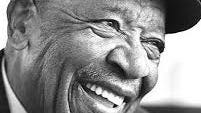
(photo: John and Vera Mae Perkins Foundation)
On March 13, 2026, Rev. Dr. John M. Perkins died in his home at the age of 95. As I’ve reflected on his life over the past ten days, I’ve been struck by how comprehensive his influence has been on me: my family, my closest friendships, the places I’ve lived, my vocation and calling, the way I see the world, how I know God. He showed me what it looks like to follow Jesus, to live a life completely transformed by the gospel. I’ve been thinking about a Bible verse that he frequently referenced and that meant a lot in his life, Galatians 2:20: “I have been crucified with Christ and I no longer live, but Christ lives in me. The life I now live in the body, I live by faith in the Son of God, who loved me and gave himself for me.” So you lived, Dr. Perkins, and we saw Christ live in you.
Moss Patch is a reader-supported publication. To receive new posts and support my work, consider becoming a free or paid subscriber.
In the Fall of 2007, I attended my first Christian Community Development Association (CCDA) conference. I was 22 years old and had graduated from college a few months prior. My faith was undergoing changes that resembled that awkward stage of puberty when you’re growing but it’s not clear how it all fits together. I had become a Christian at fourteen years old, and in high school my faith grew in two churches: a dispensational Bible Church and an American Baptist Church in rural Connecticut shaped by Billy Graham evangelicalism. Those churches taught me God’s love for me, the call of costly discipleship, a love of the Scriptures, and the possibility of having new life in Christ. But my relational and theological resources to make sense of racism and poverty were underdeveloped. When I attended college at University of Richmond, I was confronted with the reality of oppression – both learning about it in the classroom and encountering it in the time I spent on the east end of Richmond and studying abroad in Cape Town, South Africa. I faced the horrors of what human beings – many who claimed to be Christian – could do to each other and the world. Thanks to mentors and friends in Richmond, I began to see the way Jesus, the Bible, and figures in Christian history showed that the gospel is indeed good news to the poor and casts a vision for healing, reparation, and reconciliation. But there were many times when I was lonely and confused – where my faith, like a pubescent boy, faced a choice between never growing out of childhood or burying all my younger years of faith, leaving them behind, and forgetting about them.
When I attended that first CCDA conference, I encountered the community - the CCDA family - en masse before any leaders like John Perkins. I entered the opening service and joined the most diverse worshiping community I had ever been part of. We sang Black Gospel songs and songs in languages other than English. The speakers that evening were people who had experienced poverty and people who were in deep relationships with people who were poor. They had years of lived experience working against injustice and oppression and spoke with stirring passion about their love of Jesus. I saw cross-racial relationships modeled on the stage in front of me and in the people around me.
Each morning, the CCDA conference began with Bible study led by John Perkins. He held a Bible in one hand and walked all over the stage, teaching in that verse-by-verse expositional style that resonated with me and reflected the way I had been taught in my earlier formative years. Throughout the Bible study he would share his own story, his work in marginalized communities, and the philosophy and values of CCDA. He spoke about the violence and sinfulness of racism with clarity. He named the systemic injustice of poverty without reservation. And he spoke of our call to do something about it because of God’s love and Jesus’ transforming work in our lives.
I came to learn the story of Dr. Perkins’ life. He was born in 1930 to a sharecropping family in rural Mississippi. His mother died of malnutrition and his brother was killed by a police officer after coming home from WWII. As a young man, he left Mississippi for California for better opportunities. After successfully establishing a business career in California, he became a Christian through his son and heard God calling him to return to Mississippi to identify with his people, encourage them, and share with them the new life he had in Christ.
When Dr. Perkins and his family returned to Mississippi in 1960, he developed a holistic vision for ministry that came to be known as the “three R’s” of Christian Community Development: Relocation, Reconciliation, and Redistribution. Relocation, following the incarnation of Jesus, was the conviction that a person must live in the community where they minister in solidarity with the people in that community. Reconciliation meant that if Christ broke down the “dividing wall of hostility,” (Eph. 2:14), we must live into breaking down any walls that separate us by race or other barriers. Redistribution was a call to pursue God’s vision of a just distribution of all resources and opportunities. In Mendenhall, MS, Dr. Perkins and his family taught Bible study, started community co-ops to care for people in poverty, and advocated for policies like voting rights and school desegregation. Much of it came at great cost; in his book, Let Justice Roll Down, he tells of being beaten almost to death by a white police officer in Brandon Mississippi for registering people to vote. Remarkably, his response was love – not a pseudo-love that tolerated racism, but a love that continued to confront its terror and violence with boldness, a love that believed healing and transformation was possible in anyone. And he said that Black Christians should not be the only ones who bear the weight of costly discipleship under America’s sin of racism; he called white people to join his holistic, life-demanding vision for living out the gospel.
Dr. Perkins quietly inspired people around the US to live out the “three R’s,” and in 1989, they held their first CCDA conference. That network grew, and expressions based on the philosophy of CCDA sprouted up in many cities. By 2007, when I attended my first CCDA conference, there were probably about 2,000 people from around the country at the conference who were seeking to live the Christ-shaped life that Dr. Perkins lived out.
One of the workshops I attended at the 2007 conference was led by Jonathan Wilson-Hartgrove and Dr. Chanequa Walker-Barnes. I learned the story of the Rutba House that Jonathan was part of in Durham, NC, a house where people lived in community and lived out CCDA principles. When I sensed a call to theological study the following year, I chose Duke Divinity largely to be near a community from whom I could learn how to live out the vision that I saw embodied in Dr. Perkins. I enrolled in Duke Divinity and moved into Walltown around the corner from the Rutba House.
A year later, the Rutba House had a new intern named Katelyn Pollet, who I would marry in 2011. Her journey took her to the same calling of solidarity, justice, and reconciliation. I knew that if God called me to marry, I would never be able to live the life I sensed God leading me to live without a spouse who had the same calling. It feels almost miraculous that Katelyn and I found each other through that small Rutba community.
One of the things that is so special about the CCDA community that Dr. Perkins founded is the way it’s built on both deep conviction and a commitment to listening. It’s hard to hold these things together well. In practice, it looks like treasuring the stories and values that undergird the CCDA movement while being open to adaptation and learning. The “three R’s” became “Eight Key Components” that include “listening to the community.” Listening has allowed CCDA to challenge the incompleteness, misinterpretation, or misrepresentation of some language or ideas that shape it. When “Reconciliation” became a shallow effort without a vision of reparation and justice, CCDA speakers highlighted that, adding the nuance. “Relocation” did not pose the same threat of gentrification to neighborhoods in the eighties and nineties, but now that it does, the CCDA community is clarifying, re-evaluating, and reshaping what relocation looks like. CCDA has also made room for more communities and experiences. I’ll never forget the year that Mark Charles, Wayne Gordon, and Vera Mae Perkins (John Perkins’ wife) exchanged gifts as an act of hospitality and a symbolic act to mark CCDA’s commitment to honoring and including Indigenous people and ideas. Mark Charles writes about it here. Adaptation doesn’t mean jettisoning the theology, language, or principles, but rather making them more expansive. CCDA has grown into maturity without burying where it came from.
This conviction and openness to adaptation has been important in our lives. Katelyn and I have been on a journey of applying CCDA principles in Durham with our family for the past fifteen years. As I’ve reflected on Dr. Perkins’ life in recent days, I realize just how much the places we have lived, the friendships we have built, the church communities we have been part of, and the vocations we have pursued can be traced to the influence of John Perkins in our lives. Some specifics have been what we expected, and some have been surprises, but most importantly, we’ve been blessed to journey with a community of people who have encouraged and challenged us through each phase. One of the greatest gifts has been being part of the DurhamCares community; I had come to know Rev. Dr. Keith Daniel through CCDA connections, and when he was board chair and posted the Executive Director position for DurhamCares in 2016, the job description had John Perkins and CCDA written all over it. The link at the end of this article is a clip of Dr. Perkins speaking at our first Advancing the Vision event in 2016. Our work and lives together have continued to be deeply shaped Dr. Perkins’ life and the CCDA community. Life together and work together, community and calling, mutuality and mission: Dr. Perkins helped us believe that these often-disjointed parts could be inseparable, and that they could be embodied across barriers of race and class in a way that prioritized the voices of those on the margins.
One of the things that saddens me the most about the loss of John Perkins is losing a leader who built community. The world in 2026 does not have much room for someone like John Perkins. These days, people lead through virtual platforms owned by tech oligarchs who care about attention, not community. And so we don’t gain wisdom through embodied community that has the patience for challenging, re-evaluating, and re-imagining our collective identity or the world together. Instead, our identities and inspiration are determined by our own diminishing attention spans, our search for leaders who say what we want them to say, and the bottom line of the tech industry. We’re not without leaders who see this problem, and they’re doing their best to operate in our current reality. We’re going to stumble our way through it. But I hope that we can find ways to do what Dr. Perkins helped us do: commit to each other with our whole lives and bodies even as this world is pulling us apart.
I’m profoundly grateful that God made John Perkins part of my life. Dr. Perkins has called me to places of pain and challenge, and he has led me into a life that is more beautiful and full than I could have ever imagined. The gospel is meant to be lived, and Dr. Perkins lived it. I pray I never lose sight of his example. I’m grateful for the CCDA family - that I still have a community that will remind me of the joy and richness of living into Christ’s kingdom of love, peace, and justice. And I’m grateful for the community Dr. Perkins has led me to in Durham, who continues to root me and ground me in my place and in abundant life in Christ.
I’ve read some beautiful reflections on John Perkins’ life and efforts to honor him in recent days. I’ve listed some below.
I hope you read Let Justice Roll Down and join me at the CCDA conference in October in Richmond, VA.