

Senate Bill 153, also called the “North Carolina Border Protection Act”, is a blatant attack on immigrant communties in North Carolina. After becoming law when the General Assembly overrode the Governor’s veto, SB153 forces state law enforcement agencies to partner with ICE, prevents local governments and universities from protecting immigrant communities, and creates additional barriers to public benefit access. This FAQ answers your questions about what the law does, which agencies are affected, and what rights you have, regardless of your immigration status.
July 1, 2026
View a recording of our webinar co-hosted with El Pueblo to learn more about Senate Bill 153.
This embed will serve content from {{ domain }}. See our privacy statement
Publication | Guide
Jul 2, 2026

287(g) Toolkit
Learn about harmful agreements between North Carolina law enforcement and federal immigration agents — and how to oppose them in your community.
Immigrants' Rights View All Issues
Know Your Rights
May 15, 2026

- Immigrants’ Rights
Know Your Rights: Immigrants’ Rights
Regardless of your immigration status, you have guaranteed rights under the Constitution.
Legislation
Jun 24, 2026
- Immigrants’ Rights|
- +1 Issue
SB 153: Border Protection Act (Anti-Immigrant)
SB 153 is an anti-immigrant bill with multiple provisions targeting immigrant communities in North Carolina and eliminating community protections.
Status: Became Law Over Governor's Veto
Position: Oppose
Resource
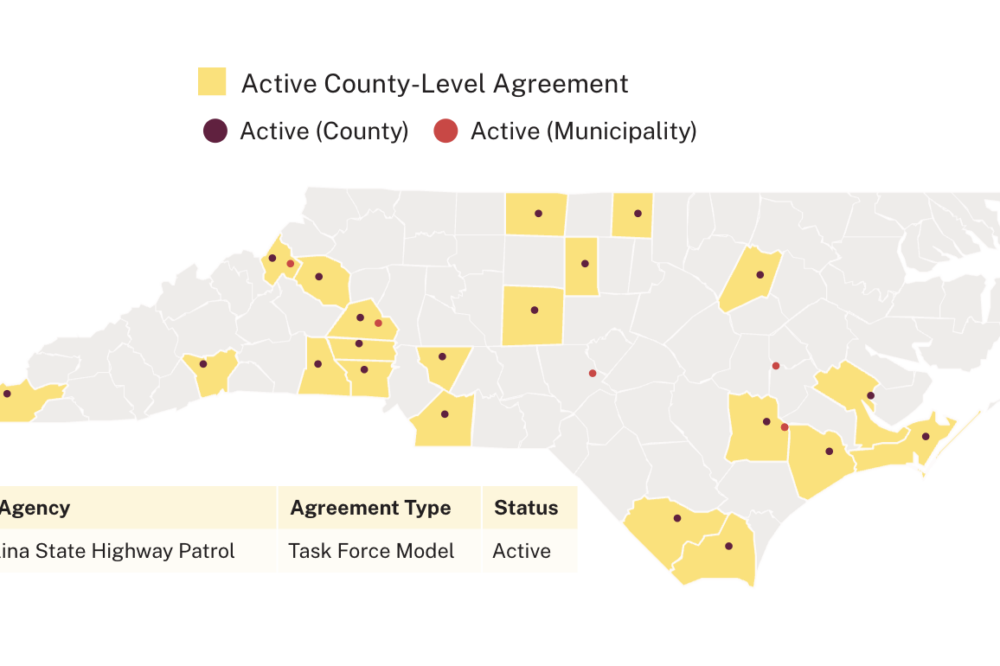
287(g) Agreements in North Carolina
A 287(g) agreement gives local law enforcement the power to enforce federal immigration law — something they normally cannot do. These agreements turn local officers into Immigration and Customs Enforcement (ICE) agents, fueling deportations, racial profiling, and fear in immigrant communities.
Press Release
NCGA Overrides Governor’s Veto on SB 153, Expands ICE Powers Despite Documented Abuses and No Accountability
Issue Areas: Immigrants’ Rights
Stay Informed
Sign up to be the first to hear about how to take action.
By completing this form, I agree to receive occasional emails per the terms of the ACLU’s privacy statement.
